Home » 2015 (Page 5)
Yearly Archives: 2015
Book Review: ‘Inside Intellectual Property – Best Practice in Intellectual Property Law, Management and Strategy’
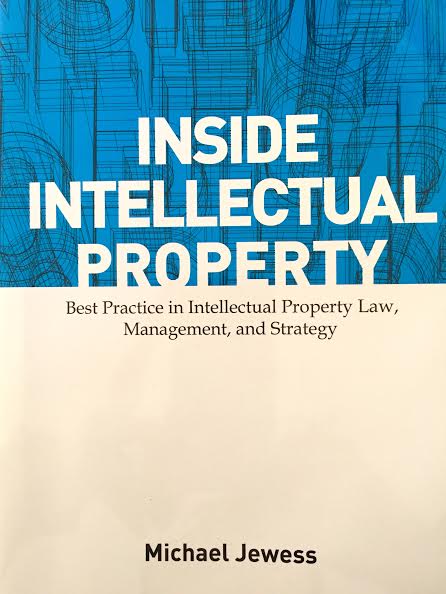 ‘Inside Intellectual Property’ is written by a true ‘insider’ . Mike Jewess is the quintessential IP insider, his impressive career in IP having spanned private practice at a major London IP firm, senior in-house roles across a range of industries (including telecoms, packaging, aerospace and defence), and heading departments. He is a sought-after speaker, commentator and mentor in the IP community. If that isn’t enough, his comprehensive book is also informed by an in-depth survey of 25 UK IP practices. The result is a text that should become a seminal reference work. (more…)
Relocation of the Museum of Brands
 From the Museum of Brands comes this press release about their relocation:
The UK’s only museum dedicated entirely to brands is relocating on 6 October 2015 to larger premises on London’s Lancaster Road. Since it opened in Notting Hill’s Colville Mews in 2005, visitors to the Museum of Brands have increased fourfold, to a staggering forty thousand in 2014. Continued growth and success have led the Museum to find a new, larger home at the London Lighthouse building, on Lancaster Road. As well as providing unrivalled insight into the history of British consumer society from the late 1800s, the move will enable the Museum to offer two unique venue spaces for hire during the day and the evening, perfect for conferences, drinks receptions and much more. (more…)
Portugal ratifies the UPC Agreement
 From IPcopy reader Gonçalo Paiva e Sousa comes news that the Portuguese president has apparently ratified the UPC Agreement.
Gonçalo’s comment in full reads:
“The Portuguese president has ratified the UPC Agreement, after the parliament approval. It is now official that Portugal has ratified the Unitary Patent Court Agreement – Presidential Decree n.º 90/2015 dated August 6, 2015.”
Keystone vs Keystone

Trade Mark Application No. 2655215
The following article is a review of case O/135/15 at the UKIPO.
Background
Keystone IEA Limited (the Opponent) opposed Keystone Wealth Management Limited’s (the Applicant) Trade Mark Application No. 2655215 for “mortgage & protection advice, financial services” in Class 36 on the basis of Section 5(2)(b) of the Trade Marks Act 1994 (similar to an earlier mark for identical/similar services, resulting in a likelihood of confusion). The Opponent relied upon its Trade Mark Registration No. 2641172 covering “estate agents” in Class 36.
The Applicant responded stating that the services were sufficiently distinguishable, meaning there was no likelihood of confusion.
No further submissions were filed and a decision was made on the papers. (more…)
Unitary patent and UPC news round-up
 Here’s a selection of unitary patent and UPC flavoured news items that we’ve seen in the last few weeks:
Opt out fee
The regulations and agreements surrounding the unitary patent package have been picked over many times which has resulted in discussions about “hard coded bifurcation“, the Malta problem and just what the “exclusive competence” of the UPC means. To add to that list we now have the question: “Just what is the legal basis for the opt out fee?” (more…)
Designs seminar review (inc. Swarovski and the freedom to operate in the luxury goods market)
 Keltie LLP was pleased to host a workshop for in-house counsel on the topic of designs. The programme kicked off with a refresher by Emily Weal, associate at Keltie, on Registered vs Unregistered designs, followed by a talk from Lynn Schreier, Senior Intellectual Property Counsel at Swarovski, who gave some insights into handling freedom-to-operate in the luxury goods market. The workshop closed with an open forum discussion moderated by Michael Moore, partner at Keltie. (more…)
High Court quashes private copying exception
 In October 2014, new legislation came into effect that legalised format shifting (e.g. CD-ripping or e-book conversion etc.) for private non-commercial use. However, a High Court judgement before Mr Justice Green issued last week quashed the Statutory Instrument used to bring in the legislation. This means that ripping music and films you own is illegal, again.
Exotic Creatures of the Deep – Huawei Technologies v. ZTE at the CJEU
 Standards Essential Patent (SEP) matters are the giant squid of the intellectual property ocean. Enormously powerful and capable of making or disrupting the commercial plans of some of the world’s largest companies, they prowl a zone so mired in technical complexity and commercial confidentiality that their mighty struggles are largely obscured from view, despite their potential to swing hundreds of millions – even billions – of dollars from one group of companies to another. Under these circumstances, it is not so surprising that a universally respected commenter on IP matters openly wondered what all the fuss was about after delivering an impeccable summary of the most important decision in this area for several years. At first sight, the lack of excitement is understandable – the decision just seems to be a lot of stuff about who should do what when and looks about as thrilling as the rules for filing a tax return. Let us, in the manner of James Cameron descending into the Challenger Deep, see if we can shed a little light on the ecosystem of the sea bed and explain why this decision might matter. (more…)
IP due diligence from an in-house perspective
 IPcopy and Keltie LLP were treated to an excellent presentation by Rob Carter of K2 IP on the subject of due diligence from an in-house perspective (Rob worked in Shell’s intellectual property legal team for over 25 years, the last 10 years as Associate General Counsel and as part of the Global IP leadership team).
A typical M&A transaction passes through a number of stages and IP plays a key role in many of these stages:
- Identification (to work out what IP is key?, how to extract value from the IP? etc.);
- Assessment (what information will need to go into the data room?, what IP assets does the target company have? what IP agreements will be needed?)
- Select (How do the IP due diligence results affect the proposed transaction?)
- Define (what IP-related agreements will be required – a brand licence, process licence, patent/trade mark assignments, etc?. What IP rights will a retained business need?)
- Execute (Negotiation and drafting of the IP-related agreements)
- Operate (the fun task of recording licences and assignments and transferring files)
- Asset Review (how did it go? How can we do better next time?)
Another round of the name game
 Proof of use should be timely and clear – case law review T-41/12 LS Fashion, LLC v OHIM
This case concerns an opposition filed by Sucesores de Miguel Herreros, SA (the Opponent), the predecessor in title to the Intervener, Gestión de Activos Isorana, SL (Isorana) on the basis of Article 8(1)(b) Council Regulation (EC) No 207/2009 (CTMR), claiming a likelihood of confusion with its earlier Spanish trade mark registration for LOREN SCOTT, covering “clothes for ladies, men and children, included [sic] boots, shoes and slippers” in class 25. (more…)
 IPcopy