Home » Trade Marks (Page 16)
Category Archives: Trade Marks
Splitting the difference
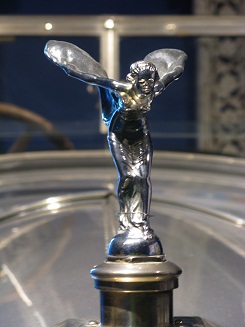 What happens when one trademark is owned by two different traders? This is almost a contradiction in terms, since the role of a trademark is to distinguish the goods and services of one trader from those of others. But it does sometimes happen.
A prime example of a famous trade mark being “split” between two separate traders is the ROLLS ROYCE brand. When the company split off into the vehicle manufacturing enterprise, and the aircraft engine enterprise, ownership became completely separate, though both companies continued to use the famous brand name.
Youview, your view.. Whose view?

The Eye of Sauron is my view
It has emerged that the long-delayed broadband TV service backed by Lord Sugar has lost its battle over the right to use ‘YouView’ as their trade mark.
The High Court found ‘youview’ to be confusingly similar to ‘Your View’, which is a business to business billing service operated by telecommunications company Total.
Trade Mark Searching
 Before filing a trade mark application or using a mark, it is advisable to conduct independent searches on the relevant official Register (or Registers if more that one territory is of interest). Whilst these searches are not compulsory or necessary in order to file a trade mark application, it is certainly a useful tool to establish whether or not there are any earlier identical or confusingly similar marks that may bar your own use or registration for the desired mark.
Independent searches available for new marks include:
1) Identical search – this is a coarse filter looking for identical marks in identical goods or services only; or
2) Full availability search – this looks for both identical and confusingly similar marks in identical/similar goods or services.
In general, an identical search is great if you have a variety of marks, as it can reduce the list significantly, or if you have already been using the mark unregistered for a period of time and do not wish to change it and full availability searches are recommended for new marks that have not yet been put to use and can be changed should a conflicting mark be identified. However, ad-hoc advice on the best searching strategy is strongly recommended.
It is also possible to conduct a proprietor search in order to review the marks of your competitors. Again, a useful tool to ensure that you do not step on anyone’s toes and that they are not straying too close to your own marks.
Whilst not exhaustive, it may also be advisable to check trade directories and the Internet against the possibility of existing trade marks which are in use and enjoy protections but are not registered.
Charlotte Blakey 14 November 2012
New Zealand join Madrid Protocol
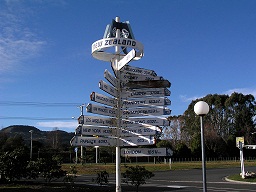 New Zealand has become the latest country to join the Madrid Protocol. The World Intellectual Property Organization (WIPO) announced New Zealand’s accession to the Madrid System for the International Registration of Marks, commonly referred to as the Madrid Protocol. The Protocol is an international agreement that allows trade mark holders to register their marks in member Countries (currently 87 and counting) by filing a single international application and designating Member States on an individual basis.
Two important points applicants need to be aware of are: 1) Any trademark holder who wishes to register a trade mark in New Zealand must make a declaration of its intention to use the mark; 2) WIPO advises that recording licences in the International Register will have no effect in New Zealand because this Country does not have practice rules allowing the recordal of trade mark licences.
The Accession of New Zealand to the Protocol will enter into force on December 10, 2012.
Gavin Hoey (Trade Mark Records Manager) 9 November 2012
Patents County Court – a trailblazer for efficient UK court proceedings
 The Patents County Court was set up under its most recent guise in late 2010 under the stewardship of Judge Birss as Deputy Judge with the aim of providing efficient Intellectual Property case trials as an alternative to costly and timely High Court trials. The key provisions of the PCC are that costs are on a fixed scale capped at £50 000, damages which the court can award is limited to £500 000 and each trial is aimed to be concluded within 2 days.
The ever-innovative HH Judge Colin Birss QC has recently issued a second non-binding preliminary opinion during a trade mark case that was due to be heard at the UK Patents County Court (PCC). A non-binding opinion is an opinion of the residing judge, generally during the case management conference stage of proceedings (before trial) as to the likely outcome of the case, were the case to be tried at the PCC.
These aren’t just any sausages, these are Newmarket sausages
 Sausages made in Newmarket, Suffolk have been awarded the Protected Geographical Indication (PGI) status from the European Commission. The Suffolk sausages join the ranks of protected foods such as Stilton blue cheese and Melton Mowbray pork pies.
The PGI status means that only products actually originating in the specific town, region or country in question may be identified as such (for example, only sausages produced in the town of Newmarket and a very specific surrounding region may be named ‘Newmarket sausages’). Generally, the products in question have very specific flavours or characteristics and so strict rules also govern the manufacture of products marketed under the PGI status. For example, Newmarket sausages must be made from prime cuts of pork from the whole carcass (no offal) and must have a minimum meat content of 70%.
Trade Marks and Companies House
In our day jobs we often meet prospective new clients who have registered the name of their new start up company at Companies House and have then commenced a programme of advertising to jump start their business. Although checking, via Companies House, that your company name has not already been taken is obviously important it should be borne in mind that availability of a name at Companies House does not necessarily mean you are free to use that name in the course of business. Neither does registration of a company name at Companies House provide the right to prevent others from trading under the same name.
Prior to adopting a new name, it is therefore prudent to speak to a trade mark attorney to ensure that the name is free for adoption and, further, to ensure that you put in place the best form of protection to enable you to prevent others from using a similar name in future.
Further information can be found here.
IP Hit or Miss?
 Ever been watching a film or something on TV and noticed that the intellectual property (IP) reference that just cropped up in the script is wrong? No? Well, you probably manage to get out more than me.
To this author at least (patent attorney, tech nerd and SF geek) references to patents, trade marks and the like seem to pop up quite frequently in the entertainment media.
IP Hit or Miss? is an occasional series of articles that takes a light-hearted look at IP as it appears in the media (films, TV, news reports etc) as an excuse to talk about different IP topics. A vague rating of “IP hit or miss?” may also be given depending on how well the particular IP concept has been incorporated into the media in question.
Want to suggest a film, TV show or other reference that we can take a look at? Drop us an email or leave a comment below.
A brand-free zone
 Guest contributor Annette Freeman writes:
When I visited Havana, Cuba back in the late 1990s, there were a lot of surprises. For a trade marks attorney, one of the most shocking was the brand-free atmosphere. Billboards displayed only public service announcements about saving water and so on, or the occasional “Vive la revolución!” Pharmacy shelves were lined with glass jars and plain white packages – not a brand to be seen. The only branded products I saw were Bacardi® rum, a local concoction called “Cuban Cola” (from Mexico), and a few venerable Cuban cigar brands.
Now, in Australia, cigarette producers and consumers are going to enter a similar Twilight Zone for trade marks, with Australia’s plain packaging legislation for tobacco products surviving a High Court challenge. This final route of appeal in the Australian legal system was always something of a last-ditch stand for the tobacco companies, as they had to reply on a constitutional argument – that the Australian government was depriving them of their property by banning use of their trademarks on the packs. Unsurprisingly, the Court held that no property was being taken, merely its use regulated.
Jay-Z and Beyoncé may have 99 problems but their trade mark ain’t one
 Contrary to press reports, all is not lost for Jay-Z and Beyoncé in seeking to protect their daughter’s name as a trade mark.
At the start of this year, Jay-Z and Beyoncé sought to register their daughter’s name – Blue Ivy Carter – as a trade mark to provide them with the sole right to use the name for a whole variety of products, from basketballs and teething rings, to hair care products and sound recordings. The application was made in name of BGK Trademark Holding, a company whose sole member is Beyoncé.
 IPcopy