Copyright – Receiving less than you bargained for?
 IPcopy is pleased to welcome guest contributors Yavan Brar and Alex Canham from Herrington & Carmichael LLP who take a look at the issue of copyright arising in oursourced contractual work. The article is reproduced with the kind permission of the authors.
A number of businesses now look to outsource non-core functions, particularly in creative areas, to third party contractors. This may be in the form of marketing design work (such as a brochure or an article), software development/maintenance work or a musical composition. However, are commissioning really clear as to the rights they have in the finished product?
Restaurants, Bars, Hospitality Businesses and Trademarks – Top Tips
 IPcopy is pleased to welcome guest contributor Stacey C. Friends, Partner at Boston firm Ruberto Israel Weiner, who provides useful tips on trade mark protection for restaurant names and hospitality businesses in general, based on her extensive experience in advising individual restaurants as well as small, medium and large restaurant chains in the USA. The article is reproduced with the kind permission of the author. Keltie’s Manuela Macchi has added comments drawing a parallel with the UK and EU.
Retail, food and hospitality businesses often have more problematic trademark issues than other types of businesses due to their territorial nature. While software, consumer goods and many other businesses immediately function in interstate or international commerce, many restaurants, hotels, or retail stores start out doing business in one geographic location. Sometimes the business plan includes a strategy to expand or franchise, or perhaps the location of the business (e.g. a hotel in downtown Boston) naturally lends itself to national and international travelers and publicity.
Are these patents the key to the next revolution in 3D printing?
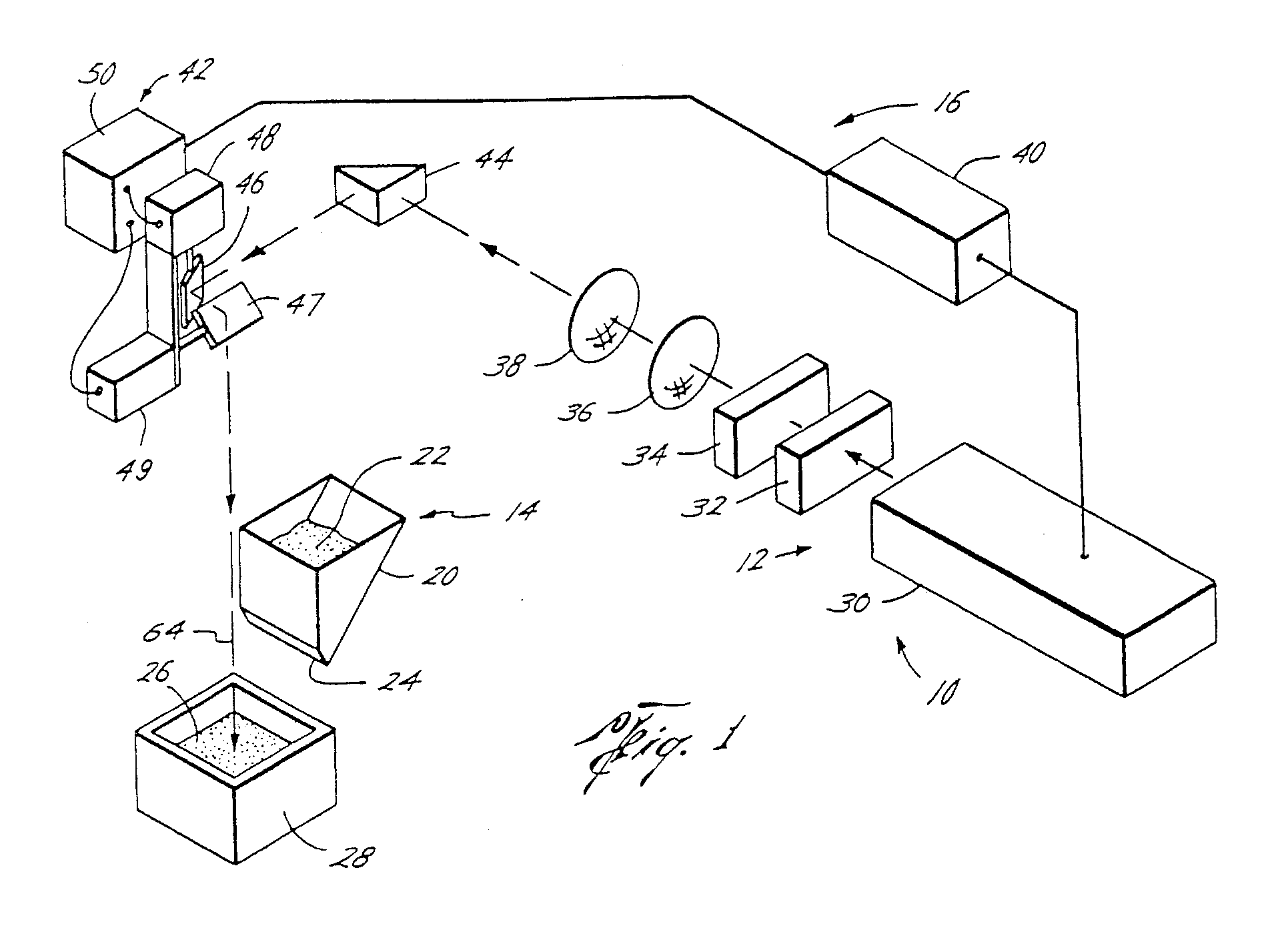 In recent years, 3D printing has entered the mainstream lexicon, partly due to increased media coverage and partly because 3D printers are becoming more affordable and accessible. In particular, the rise of desktop 3D printers aimed at the domestic market such as the MakerBot Replicator and 3D Systems Cube have been a boon for hobbyists and early adopters. These printers are sold ready to use out of the box for simplicity compared to early affordable solutions which were self-assemble kits like the MakerGear Mosaic or the open source RepRap Mendel.
Typically, low cost domestic 3D printers, including those mentioned above, use an additive manufacturing technique called Fused Deposition Modelling (FDM) to create objects. FDM involves a heated nozzle extruding thermoplastic into successive layers to build up a desired object.
The McKinsey Global Institute, The Economist and Quartz, along with many others, cite the expiration of certain patents related to FDM in 2009 as enabling the recent proliferation of cheaper FDM 3D printers. They go on to anticipate that the expiration of key patents related to another additive manufacturing technique, selective laser sintering, in 2014 may lead to another step change in the field of 3D printing.
But what are these key patents that everyone’s talking about, and will they really make such a big impact?
Unified Patent Court Rules of Procedure Consultation – Bird & Bird Comments
 After yesterday’s post about the Rules of Procedure consultation comments from the IP Federation comes news of Bird & Bird’s own response.
The full submission can be accessed here. Highlights of the submission were detailed in the email that popped into IPcopy’s Inbox a few minutes ago and these are reproduced below.
Inventive step at the UK IPO – Report of CIPA seminar
 It is one thing to argue against an inventive step objection. It is quite another thing to construct the inventive step objection in the first place.
That was the premise behind this seminar, in which two experienced examiners from the UK IPO, Stuart Purdy and Andrew Hole, offered the opportunity for attorneys to see patent examination from an examiner’s perspective, in a friendly and accessible manner. (more…)
A stocktake of your IP
 Today on IPcopy we are pleased to welcome guest contributor Annette Freeman:
This article by Ian Cockburn lists five reasons why businesses should identify, understand, account for and manage their intellectual property, the so-called “intangible assets” that often hide real and unexploited value. You might be surprised by some of these reasons. Let’s take a closer look:
IP challenges and solutions
 Today on IPcopy we are pleased to welcome the return of guest contributor Annette Freeman (Freeman IP/K2):
In 2012 IQPC released a paper reporting on trends in IP as seen by owners and practitioners worldwide.
Some of the Key Findings make interesting reading: (more…)
Bad Faith & trade marks: Frost Products Ltd v F C Frost Ltd
 On Friday 26th July 2013 Mr Justice Vos, sitting in the PCC, delivered a detailed judgment which is a stark reminder to traders not to “turn a blind eye” to competitors. In a complex case, in which the papers filled 17 lever arch files, the judge complimented counsel for managing to remain within the 2 day allocated time frame for this PCC matter. Although there was plenty of legal argument, the case ultimately turned on facts. Who was doing what, when, who knew what, when, and what they ought to have done about it. (more…)
Cycling, le Tour Cycliste Féminin and a case of trade mark infringement
 On the 21st July 2013, Chris Froome became the second British person ever to win the Tour de France. It was a great day for Britain and for British cycling. The Tour has always been considered as the pinnacle of any professional road cyclist, anyone who wins the tour will have their name etched in cycling history forever, look at Lance Armstrong, he made his mark in cycling did he not?
However, how many people have heard of Nicole Cooke, first Brit and two time winner of the Tour de France … Féminin! You would have thought that that the Tour de France Féminin, would also be the highlight of the year for all female cyclists. Sadly due to the lack of public interest in women cycling, sponsorship each year for the tour was very hard to come by. For many years, stages were held inside cities because they would contribute money towards the tour; this in turn led to long transfers from one stage to the next. (more…)
UK Space Conference – July 2013 – Report
 Gemma Sparrow of Keltie LLP and Adam Brocklehurst of K2 IP Limited visited the 2013 UK Space Conference in Glasgow last week. Here is their report from the conference.
Almost £200m of public investment has recently been announced in launcher, satellite, software and other UK space companies, and the government has set a target to ride the wave of this growing industry by capturing 10% of the global market by 2030. For example, £60m is to be invested in the SABRE engine for Reaction Engines’ Skylon space plane.
 IPcopy