Trick or Treat – India Joins Madrid Protocol from July 8, 2013
 Today on IPcopy we are pleased to welcome guest contributor Vaibhav Vutts from Vutts & Associates LLP, Advocates who is talking about India joining the Madrid Protocol.
The Madrid Protocol [‘Protocol]’comes into force in India from today, July 8, 2013, making India the one of the 90 countries in the Madrid System- 89 members of Madrid Protocol and the lone ranger Algeria as the only member of Madrid Agreement. Now applicants can designate India and get trade mark protection or “international registration” in India based on a ‘basic application’ or ‘basic registration’ in a Protocol member country. (more…)
When is a backlog not a backlog? Joint UK IPO/USPTO research paper published

This is not a pile of paperwork according to the IPO, it’s an “inventory”
The UK IPO and USPTO last week published a working draft report on their joint research effort into the thorny issue of patent backlogs. The UK IPO’s research group ERE has a post about it on their IPO Facto blog.
Before you stifle your yawn, it’s worth noting that the report contains a few unexpected additions to the debate. The first is re-naming “backlogs” as inventories or stocks of applications – they sound better already!
The Intellectual Property Bill – Unregistered Designs
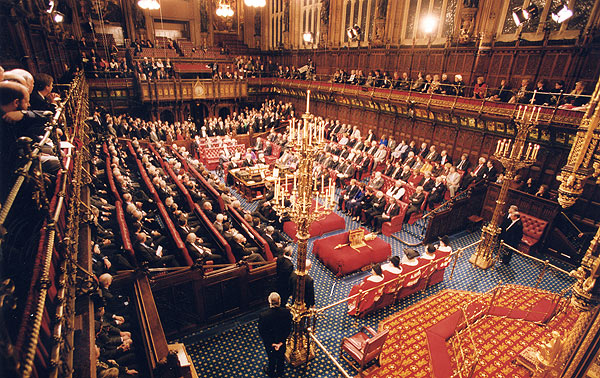
Parliamentary copyright images are reproduced with the permission of Parliament
The majority of the Intellectual Property Bill relates to changes to the protection of designs. Following the Hargreaves Review of Intellectual Property and Growth, the UK Intellectual Property Office carried out a work programme to determine potential improvements to the current design framework. This led to a consultation in July 2012 with proposals to amend the current system for both unregistered design rights and registered community designs. In turn, the proposals in the Bill have basis in the work carried out by the IPO following the Hargreaves Review.
In the third part of a series on the Intellectual Property Bill, IPCopy summarises the proposals affecting unregistered design rights. [This post looks at the IP Bill as originally published. We will revisit the IP Bill at a later date to look at amendments introduced in its passage through Parliament.]
“US Supreme Court rules that human genes cannot be patented” – A look at the Myriad case

Image by andylepp (via Flickr.com under Creative Commons licence)
“US Supreme Court rules that human genes cannot be patented” is the headline that millions of people around the world will be reading today, after the US Supreme Court issued its decision yesterday (13 June 2013) in the ‘Myriad case’.
However, the headline for the general populace is quite different to the take-home message for those in the biotechnology community and for patent attorneys in particular. Whilst there is no doubt that some patents exist to human genes (although never in so far as they encompass a natural gene within a human being – a popular misconception in the press), patent attorneys have understood for a long time that patent offices, such as in the US and Europe, have not granted such broad patents for many years – the patentability requirements are simply too tough to obtain broad gene sequence claims in the modern era. In fact, the results of ‘the human genome sequencing project’, which opened up the possibility for people to easily try to claim human gene sequences has, in fact, made that prospect far harder. People have never needed to worry that ‘their’ genes might be patented by someone else.
In yesterday’s decision it was held that a naturally occurring DNA sequence is a product of nature and not patent eligible in the US, but a cDNA sequence is patent eligible provided it does not occur naturally.
So what would be a more realistic headline to this latest US decision? Well, fortunately for all concerned, the headline is probably not so dramatic as that stated above! We need to take a couple of steps back to understand the outcome of this latest decision.
IP Hit or Miss? Software Patents in Europe
 In a recent article in the Guardian regarding President Obama’s plans to curb the perceived abuse of the patent system by non-practising entities (also known as patent trolls), the author points out that none of the recommendations involve a ban on software patent in the US, stating that:
“Nowhere in the administration’s recommendations is one that already applies in Europe: an outright ban on software patents…”
But is there such an “outright ban” on “software patents” (computer-implemented inventions) in Europe?
What Indonesia needs to do to join the world IP community

Image courtesy of Laura Kehoe
Today on IPcopy we are pleased to welcome guest contributors Prudence Jahja and Andrew Diamond from Januar Jahja & Partners (JJP) who explain the IP challenges facing Indonesia as it prepares to join the ASEAN Economic Community. The article is reproduced with the kind permission of the authors.
One Minute Read
ASEAN member states are set to form the ASEAN Economic Community, a single harmonised market similar to the EU, in 2015. Members of this new union must modernise their IP regimes to comply with specific targets, including accession to the Madrid Protocol and the PCT.
Indonesia, however, faces a number of challenges. It must make both substantive legal changes (including strengthening protection for well-known marks and recognising three-dimensional and sounds marks), as well improve administrative procedures. But with no trade mark legislation on the agenda for 2013, it is unclear whether Indonesia and other ASEAN countries will be able to make all the necessary changes by the December 31 2015 deadline.
The Intellectual Property Bill – Patents
Parliamentary copyright images are reproduced with the permission of Parliament
The Intellectual Property Bill is currently making its way through the Houses of Parliament. Announced as part of the Queen’s Speech earlier this month, the Intellectual Property Bill had its first reading in the House of Lords the following day.
The Bill proposes various amendments, particularly regarding designs and makes provisions for the UK to create its Unified Patent Court, in preparation for the ratification of the Unitary Patent Package.
In the first part of a series on the Intellectual Property Bill, IPCopy summarises the main proposals affecting patents. (more…)
Wearable Technology Patents
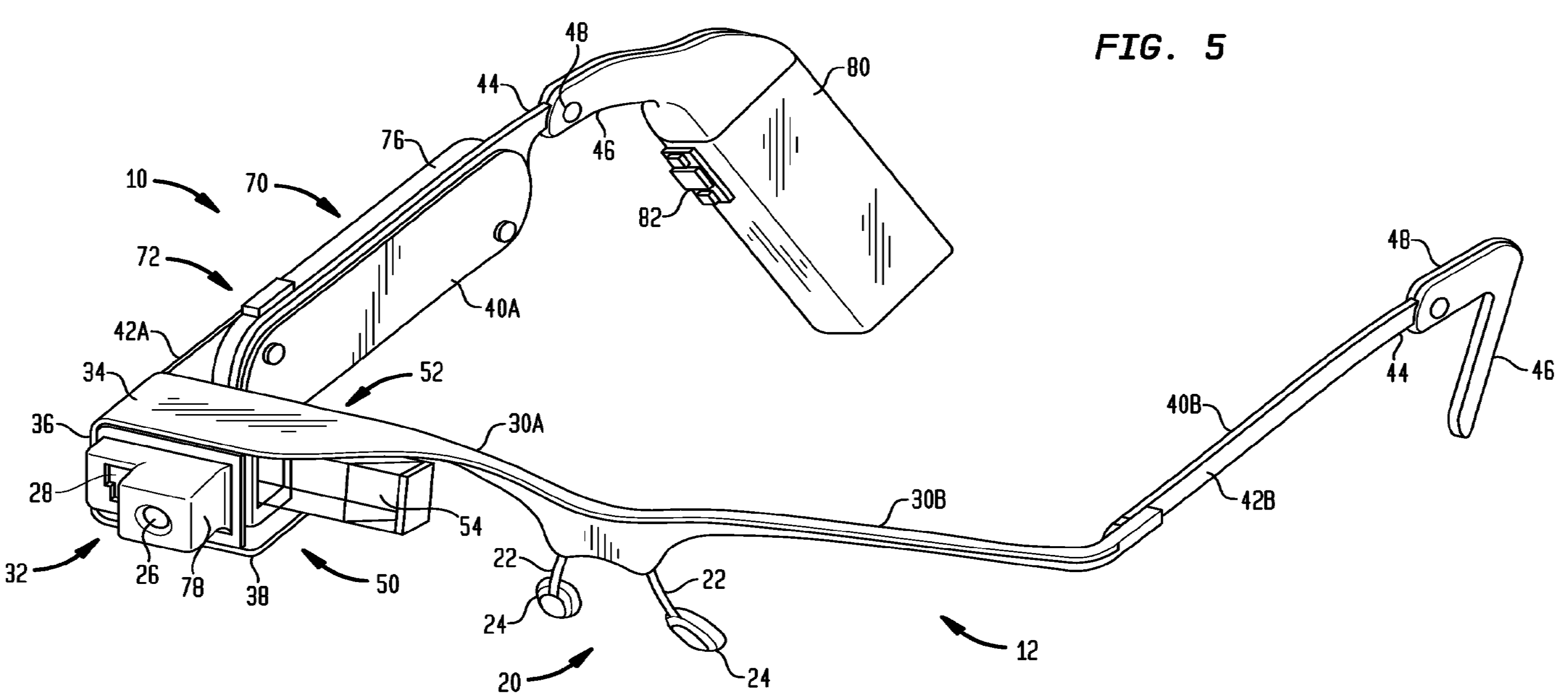
A patent application disclosing a slap bracelet supposedly relating to a rumoured Apple ‘iWatch’ did the rounds on tech blogs and webcomics when it was published earlier this year. Coincidentally, on the same day, another US patent was published for Google Glass. IPCopy takes a closer look at what can be gleaned from this pair of wearable technology patent applications.
I feel the need, the need for speed – accelerated prosecution in the UK
 Superfast, Green Channel, accelerated prosecution – Confused?
Four years on from the launch of the lean, mean, Green Channel patent machine, will this process for accelerating UK patent prosecution still have any worth should the new Superfast patent processing service be launched?
IP Hit or Miss? Armageddon – Science Miss but IP Hit?

Image – courtesy NASA/JPL-Caltech.
One of our readers suggested we take a look at Armageddon. This 1998 action/adventure sci-fi starring Bruce Willis and Ben Affleck has already been established as a science fail (1,2,3) but how accurate are the IP references made in the movie?
For those readers not familiar with Armageddon, the film revolves around an impending asteroid impact on Earth and a plan to drill deep into the asteroid and detonate a large enough nuclear weapon to split the asteroid into two pieces and thus avoid the end of the world. Bruce Willis plays the character Harry Stamper, the best deep-sea oil driller in the world, who is initially brought in to be an advisor to NASA. (more…)
 IPcopy