Home » General Interest (Page 22)
Category Archives: General Interest
Wearable Technology Patents
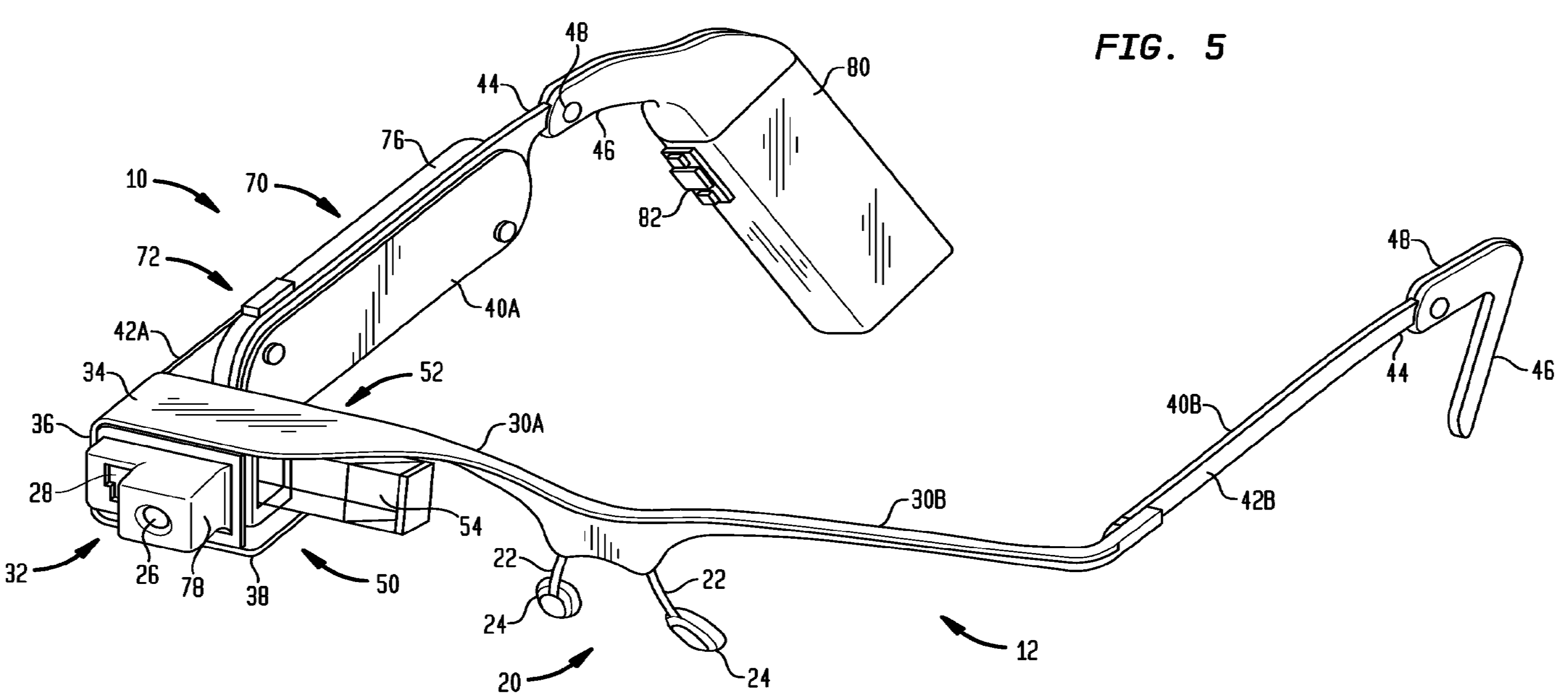
A patent application disclosing a slap bracelet supposedly relating to a rumoured Apple ‘iWatch’ did the rounds on tech blogs and webcomics when it was published earlier this year. Coincidentally, on the same day, another US patent was published for Google Glass. IPCopy takes a closer look at what can be gleaned from this pair of wearable technology patent applications.
Kim Dotcom and the Two-Factor Authentication patent: Inventor or not?
 Twitter has finally got itself two-factor authentication in a bid to help stem the flow of account hacking. Following Twitter’s announcement, Kim Schmitz (better known as Kim Dotcom), the man behind Megaupload (you know, that file sharing site in a spot of hot water over in the US right now), made an announcement of his own: he, in fact, was the inventor of two-factor authentication, and holds a patent for it.
So is this true? IPCopy delves into the public records…
IP Hit or Miss? Armageddon – Science Miss but IP Hit?

Image – courtesy NASA/JPL-Caltech.
One of our readers suggested we take a look at Armageddon. This 1998 action/adventure sci-fi starring Bruce Willis and Ben Affleck has already been established as a science fail (1,2,3) but how accurate are the IP references made in the movie?
For those readers not familiar with Armageddon, the film revolves around an impending asteroid impact on Earth and a plan to drill deep into the asteroid and detonate a large enough nuclear weapon to split the asteroid into two pieces and thus avoid the end of the world. Bruce Willis plays the character Harry Stamper, the best deep-sea oil driller in the world, who is initially brought in to be an advisor to NASA. (more…)
Misleading Invoices: a warning

What do you mean I spent all my pocket money settling a fake invoice?
No IP blog would be complete without a warning on misleading IP invoices, so here’s ours!
If you are the owner of an intellectual property (IP) right then you may from time-to-time receive communications that resemble official looking invoices for IP services. Such misleading invoices are sent directly to the IP owner and are designed such that they give the impression to the IP owner that they have to either use the service offered or pay the amount listed.
It is important that all IP owners double check the invoices they receive and satisfy themselves that such invoices are genuine.
RAND – the search for meaning reaches Seattle
 IEEE 802.11 is a set of standards that cover wireless local area networking. These standards provide the basis for wireless network products which use the Wi-Fi brand (yes, it is a brand) – most people reading this article will use such technology many times a day. Patents have played a contentious role in the development of this standard, particularly in the successful licensing campaign carried out by the Australian national science agency CSIRO. This campaign has attracted strong criticism – for example in this Ars Technica article – and also some robust defence, particularly from Australia in this piece from the Patentology blog. While clearly no-one likes to be told that they are governed by trolls, hopefully tempers have now cooled, and this is all water under the bridge.
Twitter patent surfaces off the starboard bow

tweet tweet
IPcopy took a quick look at the Twitter Innovator’s patent agreement recently and concluded that there was probably enough wiggle room in the agreement to allow Twitter to start legal actions against most people should they want to do so (see the earlier post here).
One thing that struck us at the time of writing the earlier article was the relative lack of Twitter patents and patent applications (we could only find three such patent documents and one of these belonged to TweetDeck).
Now comes news that Twitter has been working on another patent filing which reads much more closely onto their core business. This now granted US patent (US 8401009) can be found here. So, I hear you ask (probably), “How come you didn’t see that coming”? Good question.
Power in Numbers – Trade Mark Squatters in China
 Trade Mark squatting is big business in China and is becoming more and more common. The new target appears to be up and coming European brands. It would appear that as soon as a mark becomes the slightest bit known in the UK, throughout Europe or the US, the marks are being filed as trade mark applications in China by opportunistic third parties known as trade mark squatters.
It would also seem that these third parties are not just trying to reap the rewards of just one trade mark either. It is becoming more common for trade mark squatters (which are now large ‘squatting’ companies) to file hundreds of well-known or well-publicised up and coming brands belonging to foreign owners.
Falling out over sweets?
 Haribo v Lindt – Gold Bear vs Gold Foiled Teddy
On 18 December 2012, the Regional Court of Cologne decided that Swiss Confectioner Lindt’s gold foiled teddy amounted to a visual representation of German sweet maker Haribo’s famous Gold Bear.
The court held that the visual similarities would cause connotations with Haribo’s bears and upheld Haribo’s claim against the distribution of Lindt’s bears in Germany.
In the case, Haribo argued that its bears and its word trade mark for ‘Goldbär’ (German for gold bear) was known to 95% of the relevant German consumer. Lindt argued that the gold foil and red ribbon followed the form used on its chocolate bunnies and invited the court to find that the competing products did not look similar and that consumers would not be confused.
However, the courts agreed with Haribo’s view and said that consumers would refer to Lindt’s bear as the ‘gold bear’ due to its visual appearance. They held that this would result in a dilution of Haribo’s rights.
The courts have allowed an appeal on the basis that there has so far been no ruling by the German Federal Supreme Court on the question of a conflict between a word mark and a three-dimensional product design.
Lindt have appealed the decision to a higher court and a decision is expected soon.
Azhar Sadique 8 February 2013
Amazon’s “Gift order” patent: The EPO Looks a gift patent in the mouth
 It has been several weeks since we’ve seen a good bout in the Apple vs Samsung patent war. Fortunately, this cavernous gap in our lives has been filled, at least for a little while, by Amazon’s escapades before the EPO’s Opposition Division this week.
The case is a long one (If you’ve a lot of time to spare, you can check out the EPO register entry here), so IPcopy is here to give you a whistle-stop tour.
Disappearing Brands – but what becomes of the trade marks?
 HMV has become the latest high street victim to collapse into administration after 92 years on UK high streets. More than 4000 jobs and 236 stores are at risk unless a suitable buyer can be found by administrators. This news comes just days after camera retailer Jessops announced that it was unable to continue trading. As a result, all of its 187 stores were closed down. The company stated in 1937 when Frank Jessop opened his first shop in Leicester. Both HMV and the Jessops trade marks have been well known to the public following many years of use …. but what will become of the names now and can the trade marks be saved by anyone?
 IPcopy