Home » Patents (Page 37)
Category Archives: Patents
EPO issue practice note on handwritten amendments
 As we all know the EPO recently changed its procedure in front of first-instance departments such that handwritten amendments are no longer accepted in documents replacing parts of the European patent application. As well as written communications this change also applies to amendments made during oral proceedings and during oppositions.
The EPO website has now been updated with a list of frequently asked questions directed at some of the issues and questions that have been raised since the practice change was announced. (more…)
Before you sue for patent infringement, or even threaten to …
 The above title is perhaps a trap. The word “threat”, leaps to the eye; but be reassured that the author is assuming that any approach to the other side would be couched so as not to be actionable under Section 70 of the UK Patents Act. The point being made is that, even before any such approach is made (let alone before an action is begun), the client needs to reflect.
Unless the client is a patent assertion entity (=PAE=patent troll=non-practising entity=NPE) or, to a degree, a pharmaceutical company or the like, his proposed action or threat of action cannot be considered in isolation from his business more generally. (A PAE has no business to worry about other than threatening or litigating; while in pharmaceuticals and the like, patents and therefore patent litigation are a key part of the business model.) With these exceptions, an immediate concern should be the risk of a countersuit, ie an allegation by the other party that the client infringing one of his patents. In many technical areas, mutual patent awareness is poor between competitors; as a result, the client about to make the threat may be unwittingly infringing a patent of the other party, and the other party may be just as unaware of the latter infringement until, provoked by the threat, he looks for it. (more…)
The Intellectual Property Bill – CIPA call for comments
 As noted in an earlier IPcopy post the Intellectual Property Bill has left the Ping Pong stage and is now waiting for Royal Assent. Amendments introduced during the Commons stage and accepted by the Lords during ping pong included a clarified qualification criteria within Clause 3 (Qualification criteria for Unregistered design right) and tweaks to Clause 13 (criminal office for copying a registered design) following lobbying from various groups including CIPA and the IP Federation.
Some of the changes to be introduced via the IP Bill will require secondary legislation and an official consultation on, for example, the changes required to bring the Patents Act into line with the unitary patent package is expected to kick off late May/early June (see IPconnect, page). (more…)
Why not file your priority application as an EPC?
 The “obvious” thing for a UK patent applicant is to file a UK priority application; but in a survey of 10 major UK companies with in-house departments, 5 had a policy of filing EPC priority applications with a search request. An Espacenet search revealed that BASF, Bayer, Philips, and Siemens were also filing EPC priority applications. In total, the EPO receive 30 000 “first” applications per year.
The author may as well not beat about the bush: in his opinion, in many technological areas (subject to national security considerations), EPC priority filings should be the norm for any UK-based serious international patenter (and at least for German- and Dutch-based ones, too). And a client who is deterred by the upfront cost of an EPC priority filing compared with a UK priority filing arguably should not be in the patenting game at all, when the total cost of patent protection in the G7 countries over the full 21 years from priority is around £ 100 000 in current prices, and when even coverage only in the UK, the USA, and Germany costs a substantial proportion of this. (more…)
Intellectual Property Bill – Ready for Royal Assent
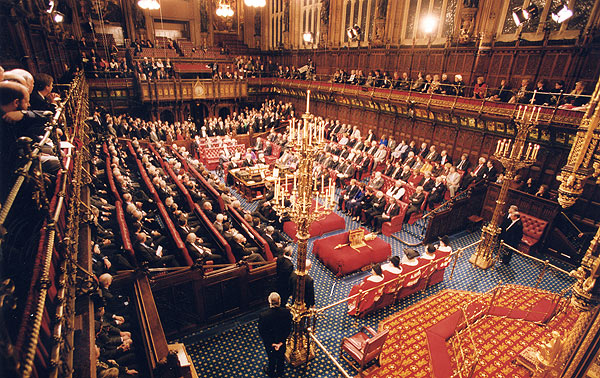
Parliamentary copyright images are reproduced with the permission of Parliament
The Intellectual Property Bill returned to the House of Lords on 2 April 2014 as part of the “ping pong” stage. The Lords considered the amendments to the Bill made in the House of Commons. As noted in our earlier post the Commons only made amendments to Clauses 3 and 13 (these clauses relate to the qualification criteria for unregistered design right and the criminal offence for copying a registered design).
There was a brief amount of discussion in the Lords (see transcript here) but both amendments were approved. The Bill will now move to Royal Assent and will pass into law.
The Intellectual Property Bill contains a clause related to the Unified Patent Court (see Clause 17). However, it is not expected that the UK will ratify the unified patent court agreement until mid 2015.
Mark Richardson 8 April 2014
New EBA Referral: The Questions are Published
As you will have seen in previous posts, IPCopy has been tracking the progress of the latest referral to the EPO Enlarged Board of Appeal which concerns the scope to which clarity under Article 84 EPC can be raised in post grant proceedings. The Decision of the Technical Board of Appeal 3.2.08 in the case in question (T0373/12, on EP1814480) was published online late last week.
(more…)
London Technology Week (16-20 June 2014) – FREE Keltie IP Clinics and IP Seminar
 London Technology Week runs from 16 June to 20 June 2014 and, as noted on the London Technology Week website “celebrates the vibrancy of tech innovation in our capital city. In a week of face to face events, businesses – from enterprise to start-ups – government, academia and general enthusiasts will come together to showcase London as a global tech leader.”
As part of London Technology Week, Keltie LLP will be holding a series of Intellectual Property Clinics and an Intellectual Property Seminar. (more…)
Pyramid Building with SCOTUS: Alice v CLS Bank
 The Alice v CLS Bank Supreme Court case has generated a lot of heat and light recently with over 50 amicus briefs filed, countless blog posts, and even a slew of newspaper articles on the subject. With commentary from the pro-software patents and anti-software patents side of the fence, the case was billed as either merely an opportunity to validate recent cases on the issue of patentable subject matter and section 101 (Bilski, Mayo & Myriad) or the End of Days Software Patents. Monday (31 March 2014) saw the oral arguments in front of the Supreme Court of the United States. Would this provide an indication of how the case would go? (more…)
Unitary Patent Package – The Ratification Game
 We previously reported that both France and Malta had ratified the unified patent court agreement. Despite this we had held off updating the “Ratification” Game post until the European Commission website showed that further instruments of ratification had actually been deposited in Brussels.
So, who would grab second place after Austria? Malta or France or maybe an outsider?
Well, we can now reveal that (more…)
House of Commons & House of Lords organise game of Ping Pong (Intellectual Property Bill)

Inter-House Ping Pong
The Report Stage and the third reading of the Intellectual Property Bill took place on 12 March. After some significant discussion time over the last few weeks on all the provisions within the Bill, the IP Bill leaves the Commons with amendments to Clause 3 (Qualification criteria for Unregistered design right) and Clause 13 (the criminal offence for copying a registered design) only. A full list of the Commons Amendments can be found here and marked up versions of the two clauses in question are below.
Since the Commons has made amendments to the Bill, the Lords needs to have another look and (i) agree to the amendments; (ii) disagree with the amendments; or (iii) propose an alternative. When a Bill passes back between the two Houses it is referred to as “ping pong” (or whiff whaff if you prefer….). When the exact wording has been agreed by the two Houses then the Bill will be ready for royal assent. Whiff whaff is currently scheduled for 2 April 2014.
We have taken a quick look at the changes made by the Commons to the Bill down below.
 IPcopy