Misleading Invoices: a warning

What do you mean I spent all my pocket money settling a fake invoice?
No IP blog would be complete without a warning on misleading IP invoices, so here’s ours!
If you are the owner of an intellectual property (IP) right then you may from time-to-time receive communications that resemble official looking invoices for IP services. Such misleading invoices are sent directly to the IP owner and are designed such that they give the impression to the IP owner that they have to either use the service offered or pay the amount listed.
It is important that all IP owners double check the invoices they receive and satisfy themselves that such invoices are genuine.
Superfast Patent Processing: UK IPO Consultation
 The UKIPO has opened consultation on a new accelerated prosecution service dubbed “superfast”. The intention appears to be to offer this premium service in addition to free acceleration services currently available, which can already bring the time taken to obtain a UK patent to less than a year.
EPO proposes changes to search rules [Updated – 11/11/13]
 The European Patent Office is proposing to amend the rules regarding searches for Euro-PCT applications. The aim of the proposed changes is to make the Euro-PCT system fairer for applicants of international applications who use the EPO as the International Searching Authority. A further aim is to bring Euro-PCT search practice into line with direct European practice.
Unitary Patent Package – Timeline of events for 2013/2014
 The much heralded unitary patent package* appears to be moving towards implementation after many years of proposal and counter-proposal.
Looking ahead, the various parts of the package are likely to come into force in 2014 (according to the official timescale anyway). Over the coming 12-24 months, there are a number of keys dates to note.
Youview 2
 There have been further developments in the YouView and YourView trade mark battle as the proprietors of YourView, Total, have initiated trade mark infringement proceedings against Lord Sugar’s YouView business.
Earlier this month the High Court upheld the UK Intellectual Property Office’s decision that the names were confusingly similar. Despite the court decision, YouView are yet to change their branding and state that they ‘have no intention of changing name’.
Kitchen Nightmares: The Spotted Pig
 Things are boiling over in the restaurant industry as Gordon Ramsay has applied to register a trade mark for ‘The Spotted Pig’ in the UK covering various food products and, importantly, restaurant services.
As readers might know, The Spotted Pig is a Michelin starred restaurant in New York City run by fellow Brit chef April Bloomfield, and boasts celebrity co-owners Jay-Z and Bono. The Spotted Pig is a hit in NYC serving ‘seasonal British and Italian, using local ingredients where possible’ and has been open since 2004.
Splitting the difference
 What happens when one trademark is owned by two different traders? This is almost a contradiction in terms, since the role of a trademark is to distinguish the goods and services of one trader from those of others. But it does sometimes happen.
A prime example of a famous trade mark being “split” between two separate traders is the ROLLS ROYCE brand. When the company split off into the vehicle manufacturing enterprise, and the aircraft engine enterprise, ownership became completely separate, though both companies continued to use the famous brand name.
Youview, your view.. Whose view?

The Eye of Sauron is my view
It has emerged that the long-delayed broadband TV service backed by Lord Sugar has lost its battle over the right to use ‘YouView’ as their trade mark.
The High Court found ‘youview’ to be confusingly similar to ‘Your View’, which is a business to business billing service operated by telecommunications company Total.
New Zealand join Madrid Protocol
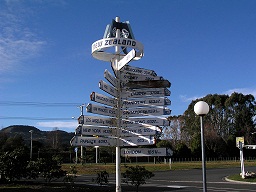 New Zealand has become the latest country to join the Madrid Protocol. The World Intellectual Property Organization (WIPO) announced New Zealand’s accession to the Madrid System for the International Registration of Marks, commonly referred to as the Madrid Protocol. The Protocol is an international agreement that allows trade mark holders to register their marks in member Countries (currently 87 and counting) by filing a single international application and designating Member States on an individual basis.
Two important points applicants need to be aware of are: 1) Any trademark holder who wishes to register a trade mark in New Zealand must make a declaration of its intention to use the mark; 2) WIPO advises that recording licences in the International Register will have no effect in New Zealand because this Country does not have practice rules allowing the recordal of trade mark licences.
The Accession of New Zealand to the Protocol will enter into force on December 10, 2012.
Gavin Hoey (Trade Mark Records Manager) 9 November 2012
Patents County Court – a trailblazer for efficient UK court proceedings
 The Patents County Court was set up under its most recent guise in late 2010 under the stewardship of Judge Birss as Deputy Judge with the aim of providing efficient Intellectual Property case trials as an alternative to costly and timely High Court trials. The key provisions of the PCC are that costs are on a fixed scale capped at £50 000, damages which the court can award is limited to £500 000 and each trial is aimed to be concluded within 2 days.
The ever-innovative HH Judge Colin Birss QC has recently issued a second non-binding preliminary opinion during a trade mark case that was due to be heard at the UK Patents County Court (PCC). A non-binding opinion is an opinion of the residing judge, generally during the case management conference stage of proceedings (before trial) as to the likely outcome of the case, were the case to be tried at the PCC.
 IPcopy