Home » Patents (Page 42)
Category Archives: Patents
Patentable subject matter in the US

On 20th September 2013, as part of a CIPA series of webinars, Seth D. Levy (Nixon Peabody) gave a very clear presentation on the state of play with respect to patentable subject matter cases in the US.
Before we get into the review of the presentation it is worth pointing out that although the focus of the talk was on medical diagnostic claims (“a challenging area these days in the US”), there is uncertainty whether there may be wider implications for the software and business method fields in the US.
As such, and speaking as a “software” patent attorney, the subject matter of this presentation should be of interest to all patent attorneys and other interested individuals regardless of their technical field.
The talk covered the following general areas: background to the current state of case law in the US (essentially the Supreme Court prior to Myriad Genetics); Myriad and its aftermath; USPTO Guidance; and prosecution tips. (more…)

Top 10 Points from EPO case law from 2013 (CIPA Event 27 November 2013)
Following on from last week’s guest post from Suleman Ali of Holly IP and K2 about top 10 points from UK Court Decisions in 2013 we now have Suleman’s 10 points from EPO case law in 2013. This post was originally posted on the Holly IP blog and is reproduced with the permission of the author.
These decisions were discussed at a CIPA event on 27 November 2013, and the following points are based on the cases selected by the speakers.
US Supreme Court to take a run at Alice v. CLS Bank
 The US Supreme Court announced on Friday that it is to review the Alice Corp. v. CLS Bank Intl. case. The US Court of Appeal, of course, recently handed down its take on the case (see decision dated 10 May 2013 here) in which the 10 judge panel exhibited something of a split opinion.
At the recent AIPLA event in Washington Chief Judge Rader (one of the 10 judge CAFC panel on the Alice/CLS case) commented that he regarded that case as a personal failure and a failure of his institution (Court of Appeals for the Federal Circuit). Listening to other attorneys at AIPLA a number of feelings were expressed about the case including bafflement, frustration and the merest hint of “the End of Days”.
Top 10 Points from UK Court Decisions from 2013 (CIPA Event 27 November 2013)
Today we have a guest post from Suleman Ali of Holly IP and K2. This post was originally posted on the Holly IP blog IP Trends and is reproduced with the permission of the author.
These decisions were discussed at a CIPA event on 27 November 2013, and the following points are based on the cases selected by the speakers.
Proposal to amend Brussels I Regulation rumbles on
 As noted back at the end of July the European Commision adopted a Proposal (2013/0268 (COD), which can be found here) for a regulation amending the Brussels I Regulation on the jurisdiction and the recognition and enforcement of judgments in civil and commercial matters (Reg. No 1215/2012). This amendment is necessary to bring the Agreement on the Unified Patent Court into effect. (more…)
CIPA “The UPC Needs You” webinar & other unitary patent snippets
A couple of weeks ago, on 13 November, CIPA held a webinar (“The UPC is calling You”) on the application process for unified patent court judges. The closing date for expressions of interest for UPC judges was 15th November 2013 and according to the Unified Patent Court website there has been an overwhelming response to the call for expression of interest of candidate judges. Not bad for a job where the salary, benefits, exact training schedule etc are not yet known!
The Unitary Patent and the UPC – CIPA seminar 19th November 2013
Yesterday I had the pleasure of speaking at the CIPA seminar “The Unitary Patent and the UPC” with Alan Johnson of Bristows LLP and Tim Roberts. A copy of the slides for my section of the talk is enclosed below along with some links to additional information covered in the talk (the Poland Deloitte report and some views on the impact of the Scottish Referendum).
EPO changes rules on Euro-PCT searches
 Somewhat lost alongside the exciting announcement that the EPO is going to scrap the controversial 2 year divisional deadline rule was another recent decision of the Administrative Council.
Readers of the consultation section on the EPO website will have been aware that there was a consultation earlier in the year relating to Rule 164 and in a decision dated 16 October 2013 the Administrative Council duly announced a change to Rule 164 (which is reproduced in full at the bottom of the post). The amended Rule 164 is scheduled to enter into force on 1 November 2014 for any application for which the supplementary European search report under Article 153(7) EPC has not been drawn up as of 1 November 2014 or the first communication under Article 94(3) EPC and Rule 71(1) and (2) EPC or, as the case may be, Rule 71(3) EPC has not been drawn up as of 1 November 2014. (more…)
Are these patents the key to the next revolution in 3D printing?
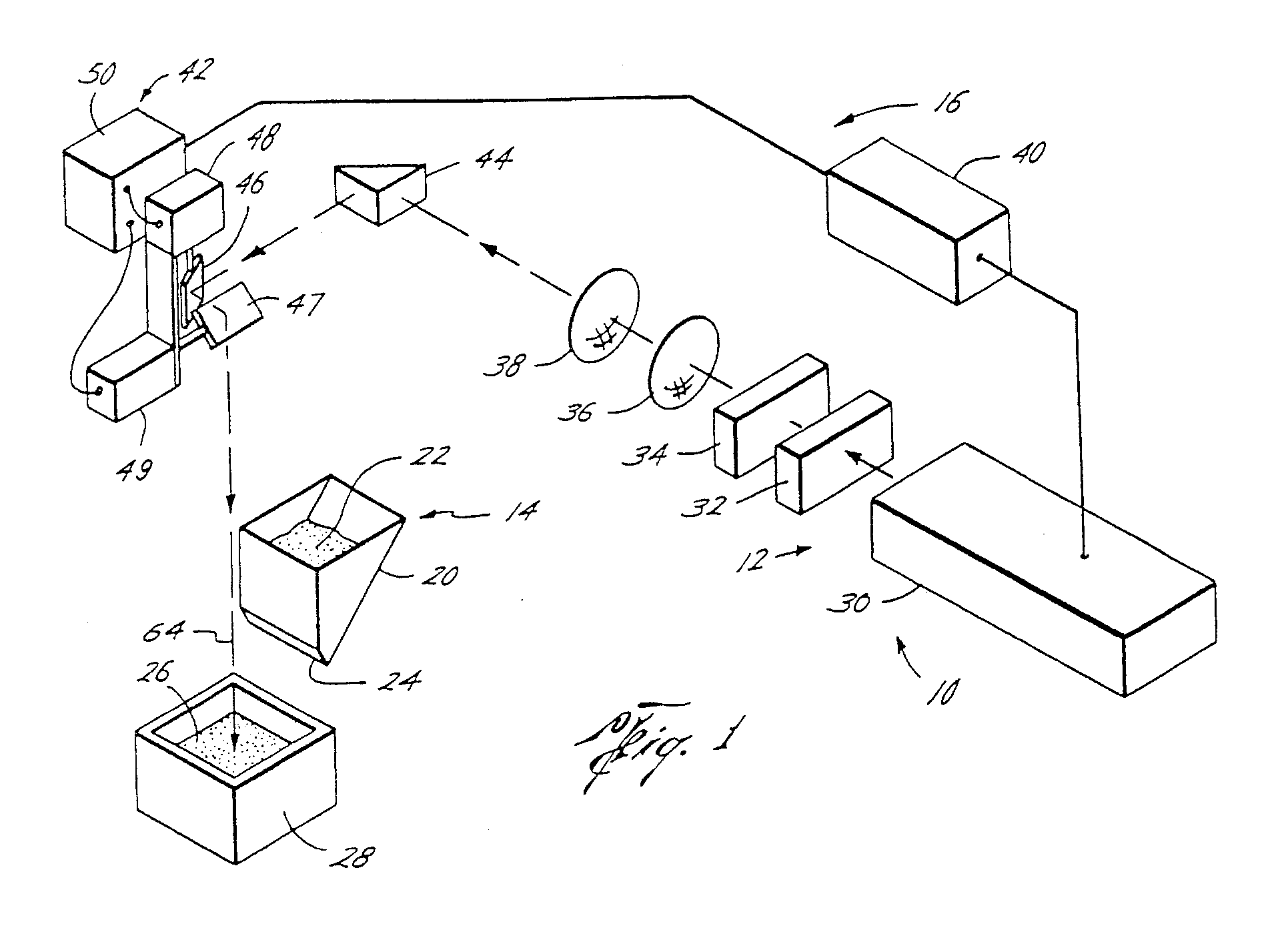 In recent years, 3D printing has entered the mainstream lexicon, partly due to increased media coverage and partly because 3D printers are becoming more affordable and accessible. In particular, the rise of desktop 3D printers aimed at the domestic market such as the MakerBot Replicator and 3D Systems Cube have been a boon for hobbyists and early adopters. These printers are sold ready to use out of the box for simplicity compared to early affordable solutions which were self-assemble kits like the MakerGear Mosaic or the open source RepRap Mendel.
Typically, low cost domestic 3D printers, including those mentioned above, use an additive manufacturing technique called Fused Deposition Modelling (FDM) to create objects. FDM involves a heated nozzle extruding thermoplastic into successive layers to build up a desired object.
The McKinsey Global Institute, The Economist and Quartz, along with many others, cite the expiration of certain patents related to FDM in 2009 as enabling the recent proliferation of cheaper FDM 3D printers. They go on to anticipate that the expiration of key patents related to another additive manufacturing technique, selective laser sintering, in 2014 may lead to another step change in the field of 3D printing.
But what are these key patents that everyone’s talking about, and will they really make such a big impact?
 IPcopy