Disaster has struck with the Easter bunny lost in the world of IP, days away from Easter Sunday. Luckily, he’s left a few clues with his Easter related designs and inventions to lead us to his hiding spot. (more…)
The UK is shortly expected to leave the European Union, which may have an effect on your Intellectual Property Rights. This article is designed to briefly set out those potential changes. (more…)
As we approach our national holiday we can’t help but feel patriotic. Here we take a look at what the good people from the Emerald Isle have contributed to the world over the years and more importantly how intellectual property has played its part. There are plenty of impressive technical advancements that originated in Ireland including the induction coil, the submarine, the hypodermic syringe, the binaural stethoscope…We could go on and on, but we understand you have plenty of other priorities for the weekend so we’ll keep it snappy with our top 5 intellectual property related contributions that play a pivotal role in the everyday life of the Irish individual. (more…)
The European Patent Office (EPO) is seeking input for its Strategic Plan 2023. This project aims to set the vision of the EPO for 2019–2023. The consultationwill run from 23 January to 15 March. The results of the consultation will then be presented to the Administrative Council in June 2019.
All EPO stakeholders may participate in this consultation. The EPO imagine this could include: applicants (both individual and corporate), patent attorneys, law firms, national patent offices, governmental and non-governmental organisations, and universities. If you deal with the EPO and want your opinions known; this is your opportunity. (more…)
The differences between US and European patent law can often trip up practitioners unless they are careful – while most European patent law is (fairly) well harmonised, US patent law is quite different. While the two are closer in some ways than they have been – obviousness in the US has become much more like inventive step in Europe since KSR v. Teleflex, for example – there are some sharp differences. One subtle one is the interplay between confidentiality and sale. The recent decision in Helsinn Healthcare S.A: v. TEVA Pharmaceuticals USA INC., et al., reported here in IPKat, shows that one very real trap still exists. (more…)
Much like a nurse attempting to decipher a doctor’s scrawled prescription note for their patient, a large proportion of a European patent attorney’s working life seems to involve interpreting examination reports for their clients, and in particular explaining the various comments and objections raised by the EPO examiners. As such, we thought it might be useful to summarise various objections that Applicants might see in Communications from the EPO, and what they really mean. (more…)
Prosecuting a patent application from filing to grant can be a long winded process lasting, in some cases, many years. An application needs to be searched and then published before being examined. Delays at the UK Intellectual Property Office in certain technology fields can mean that examination reports take years rather than months to issue and delays at the European Patent Office (EPO) have, in extreme cases, meant that applications have remained pending for even longer.
In many cases applicants may be happy to proceed at a slow pace because it allows an invention to be developed and marketing/commercialisation plans put in place. The cost of the patent process can also be spread out over time. There are however circumstances where a more speedy grant would be useful, for example where you think someone is using your invention and you want a granted patent to allow some kind of infringement action to be taken or where an investor asks for a granted patent before they release funds for the development of your company/invention.
Both the UKIPO and the EPO offer a range of acceleration procedures that can help get a granted patent more quickly. The various options for these two patent offices are discussed below. (more…)
Much has been said in recent years about the EPO’s ‘Early Certainty from Search’ program and similar programs for examination and opposition. Since 2014, patent examiners have been pushed to increase their productivity to help reduce the time period between the filing of a patent application and its eventual grant or refusal. While patent attorneys, applicants and (strictly anonymous) examiners have now and then expressed their worries about a perceived reduction in quality of some of the ‘examination products’ and a discomforting increase of workload for examiners, the EPO has frequently advertised the success of this program. Aside from some unwanted side-effects, the main idea behind these programs is a laudable one. In the words of the EPO: “[to] benefit the general public by enhancing the transparency of pending patent rights in Europe, providing an overview of prior art and patentability at an early stage in the proceedings”. Who could ever object to that? (more…)
 Disaster has struck with the Easter bunny lost in the world of IP, days away from Easter Sunday. Luckily, he’s left a few clues with his Easter related designs and inventions to lead us to his hiding spot.
 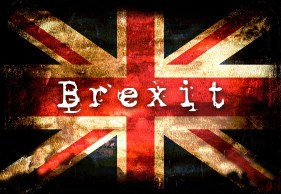 The UK is shortly expected to leave the European Union, which may have an effect on your Intellectual Property Rights. This article is designed to briefly set out those potential changes.
 The European Patent Office (EPO) is seeking input for its Strategic Plan 2023. This project aims to set the vision of the EPO for 2019–2023. The
  The differences between US and European patent law can often trip up practitioners unless they are careful – while most European patent law is (fairly) well harmonised, US patent law is quite different. While the two are closer in some ways than they have been – obviousness in the US has become much more like inventive step in Europe since
  Much like a nurse attempting to decipher a doctor’s scrawled prescription note for their patient, a large proportion of a European patent attorney’s working life seems to involve interpreting examination reports for their clients, and in particular explaining the various comments and objections raised by the EPO examiners. As such, we thought it might be useful to summarise various objections that Applicants might see in Communications from the EPO, and what they really mean.
  Prosecuting a patent application from filing to grant can be a long winded process lasting, in some cases, many years. An application needs to be searched and then published before being examined. Delays at the UK Intellectual Property Office in certain technology fields can mean that examination reports take years rather than months to issue and delays at the European Patent Office (EPO) have, in extreme cases, meant that applications have remained pending for even longer.
 Much has been said in recent years about the EPO’s ‘Early Certainty from Search’ program and similar programs for examination and opposition. Since 2014, patent examiners have been pushed to increase their productivity to help reduce the time period between the filing of a patent application and its eventual grant or refusal. While patent attorneys, applicants and (strictly anonymous) examiners have now and then expressed their worries about a perceived reduction in quality of some of the ‘examination products’ and a discomforting increase of workload for examiners, the EPO has frequently advertised the success of this program. Aside from some unwanted side-effects, the main idea behind these programs is a laudable one. In the words of the EPO: “[to] benefit the general public by enhancing the transparency of pending patent rights in Europe, providing an overview of prior art and patentability at an early stage in the proceedings”. Who could ever object to that? (more…)
 IPcopy