Home » Posts tagged 'UKIPO' (Page 4)
Tag Archives: UKIPO
Trade Mark Tribunal – Fast Track Opposition Procedure at the UKIPO
 In a recent post we looked at a consultation from the UKIPO which was proposing superfast patent processing. That’s not the only consultation that is running at the UKIPO and there is a further one entitled “Fast Track Opposition Procedure. Trade Mark Tribunal”. This consultation is running until 17 May 2013 and seeks the views of users and potential users of the UK national registration system about the introduction of a lower cost “fast track” opposition based on earlier registered or pending marks.
As noted in the consultation a fast track opposition process may differ from the existing procedures in a number of ways, namely:
- Lower opposition fee
- Grounds limited to s.5(1)/5(2)
- Limit to the number of earlier marks that can be relied upon
- If over 5 years old, proof of use to be filed with the notice of opposition using a pro-forma statement with exhibits
- Leave required for either party to file any further evidence
- Decisions normally from the papers
- Introduction of refundable appeal fee large enough to discourage frivolous appeals
The full reasoning behind the above proposals can be found in the consultation document but a few issues with the proposals, as highlighted by our trade mark team, are noted below:
Superfast Patent Processing: UK IPO Consultation
The UKIPO has opened consultation on a new accelerated prosecution service dubbed “superfast”. The intention appears to be to offer this premium service in addition to free acceleration services currently available, which can already bring the time taken to obtain a UK patent to less than a year.
UKIPO: Possible low-cost appeal route with an Appointed Person for Patents
The newly be-logoed UK Intellectual Property Office has recently released a Discussion Paper on the possibility of introducing an Appointed Person for Patents at the IPO (I promised ipcopymark I wouldn’t mention that on an initial glance he read this as an Anointed Person for Patents…so you didn’t hear it from me…), and has invited comments from one and all.
Presently, the route of appeal from any decision of the IPO on patents is generally to the Patents Court (part of the High Court, or to the Court of Session in Scotland). If an Appointed Person for Patents is indeed Anointed, this would provide a new low-cost route of Appeal for patent decisions issued by the IPO. The decision of the Appointed Person would be final, and no further appeal to the High Court would be possible. (more…)
We want to be guinea pigs too
 Following concerns that the strict patent infringement tests applied by the Courts in the UK are driving lucrative clinical trials overseas, the UK government has now concluded a review of the statute that would allow for a broader ‘Bolar’ exemption to enter UK law.
The UK Intellectual Property Office – 160 years young
 Next year the London Underground is 150 years old. With an extensive maintenance project underway some might say it is showing its age.
The UK Intellectual Property Offfice on the other hand celebrates 160 years this year and this IPcopywriter believes it is a case of 160 years young rather than 160 years old.
Does Every Experiment Need a Test Tube?
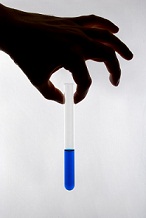 The UK Intellectual Property Office has recently launched a consultation entitled “The Research and Bolar Exceptions”. While all patent practitioners may have got as far as the end of the title, the profession will split into two groups after reading the subtitle, “A formal consultation on patent infringement in clinical and field trials”, indicating that this is another exercise in sculpting patent law specifically for the pharmaceutical industry.
This all relates to the interpretation of s.60(5)(b) of the Patents Act 1977, which states that:
“An act which, apart from this subsection, would constitute an infringement of a patent for an invention shall not do so if… it is done for experimental purposes relevant to the subject-matter of the invention;”
Most European countries have a similar provision as a result of the harmonisation in European patent law associated with the creation of the Community Patent and European Patent Conventions in the 1970s. Different countries, however, interpret this provision in quite different ways. The UK courts have interpreted this exception narrowly, leading to widespread concern that the UK is out of step in not having a clear exception for clinical trials.
 IPcopy