Home » 2013 (Page 10)
Yearly Archives: 2013
Trade Mark News Bites
 From the the iWatch to the Super Bowl, here’s a collection of trade mark related news stories that have caught our eye in the last couple of weeks.
Unitary patent package – Agreement on a Unified Patent Court republished
 The Agreement on a Unified Patent Court was republished yesterday. Those of you priming yourselves to review the agrement for changes can stand down – it’s merely a republication in the Official Journal of the European Union and the only changes are formatting changes!
The final texts of the unitary patent package are therefore:
- Unitary patent regulation – 1257/2012
- Translation regulation – 1260/2012
- Agreement on a Unified Patent Court – 2013/C 175/01
The 15th Draft of the Rules of Procedure of the Unified Patent Court has recently been released but a copy is not currently available. The public consultation on the rules is expected shortly and we’ll update IPcopy as soon as we get a copy.
Mark Richardson 21 June 2013
The Intellectual Property Bill – Unregistered Designs
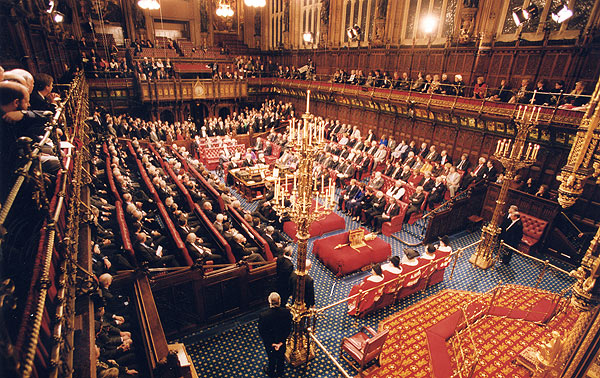
Parliamentary copyright images are reproduced with the permission of Parliament
The majority of the Intellectual Property Bill relates to changes to the protection of designs. Following the Hargreaves Review of Intellectual Property and Growth, the UK Intellectual Property Office carried out a work programme to determine potential improvements to the current design framework. This led to a consultation in July 2012 with proposals to amend the current system for both unregistered design rights and registered community designs. In turn, the proposals in the Bill have basis in the work carried out by the IPO following the Hargreaves Review.
In the third part of a series on the Intellectual Property Bill, IPCopy summarises the proposals affecting unregistered design rights. [This post looks at the IP Bill as originally published. We will revisit the IP Bill at a later date to look at amendments introduced in its passage through Parliament.]
The Unitary Patent and the Fee-saving Myth: Time to put that misleading £20,000 figure back in its box, please.
 Over at IPCopy, we’re annoyed. Sighs are echoing around the open plan. Hands are being thrown up into the air in despair. Ipcopymark is particularly riled, and had to be placated with a helping of pork pie.
What could have ruffled our collective feathers, I hear you ask? Well, the UKIPO website has a new webpage with details of the UK Intellectual Property Bill. This in itself is not the source of our aggravation (indeed, there is some good juicy stuff to be found there, including a link to a marked-up copy of the proposed changes to legislation, and details of the proposed secondary regulation, which the IPCopy team has been surveying with interest1), but this informative new webpage includes something that really got on our wick.
Eleven of Hearts – Bale’s Trade Mark
 Following in the footsteps of other world-class footballers wishing to take advantage of the growing commercialisation of football (or “soccer” for our American friends), Gareth Bale has applied to register his famous heart-shaped goal celebration as a trade mark at the UK Intellectual Property Office. Details of Bale’s application for the word mark ELEVEN OF HEARTS can be found here, while the application for the logo can be found here.
With either a big-money transfer to the King of Spain’s Real Madrid or a large contract-extension in the pipeline, the Tottenham Hotspurs’ Number 11 could be forgiven for rolling over on his bed of £50 notes and going back to sleep. However, given that the average footballer’s career spans around fifteen years, IPcopy would not be surprised to see more and more footballers bringing out their own branded football boots (like Ronaldo’s R9 or Cristiano Ronaldo’s CR7 boots, both released in partnership with Nike) or tiny briefs (à la David Beckham).
As for choosing which trade mark to protect, they would have to go some way to beat the imagination of NBA player Anthony Davis, who spent part of his first pay-check obtaining trade mark protection (“FEAR THE BROW!”) for his prominent uni-brow – check out the brow in his headshot here!
Nick Bowie 18 June 2013
Trade Mark and Carry On (Posters, Trade Marks & the Tardis)
 “Trade mark and carry on” is a slogan to bear in mind because, as the following cases illustrate, people often think a name, slogan or even a police box are free to use.
We see a good example with the famous slogan “Keep Calm and Carry On”, which was thought to be owned by the British government. Indeed, “Keep Calm and Carry On” was one of a series of propaganda posters made by the British government during World War 2 to reassure the population, a fact which remained unknown to the public for over half a century. In the early 2000s, a couple (named Manley) who owned the Britsh bookshop “Barter Books” rediscovered the posters in a box of old books.When the booksellers decided to display it in their library, it became very popular. The “Keep Calm” poster was exported worldwide and became one of the first really emblematic images of the 21st century.
Unitary patent – Presentation from LES Meeting
On the 13th June 2013, the Licensing Executives Society of Britain and Ireland held a meeting entitled “Europe’s New Unified Patent Court – for better or for worse?“. The meeting was chaired by the Rt. Hon. Professor Sir Robin Jacob and included a number of distinguished speakers associated with the world of IP: Richard Vary (Head of Litigation at Nokia), Arnaud Michel (Gide Loyrette Nouel), Alan Johnson (Bristows) and Ian Wood (Charles Russell). Oh, and me (so an 80% distinguished speaking panel then).
The meeting covered a number of aspects of the proposed Unitary Patent system (or “A European Tragedy” as Sir Robin Jacob put it). My presentation is attached below along with a brief overview of my slides.
“US Supreme Court rules that human genes cannot be patented” – A look at the Myriad case

Image by andylepp (via Flickr.com under Creative Commons licence)
“US Supreme Court rules that human genes cannot be patented” is the headline that millions of people around the world will be reading today, after the US Supreme Court issued its decision yesterday (13 June 2013) in the ‘Myriad case’.
However, the headline for the general populace is quite different to the take-home message for those in the biotechnology community and for patent attorneys in particular. Whilst there is no doubt that some patents exist to human genes (although never in so far as they encompass a natural gene within a human being – a popular misconception in the press), patent attorneys have understood for a long time that patent offices, such as in the US and Europe, have not granted such broad patents for many years – the patentability requirements are simply too tough to obtain broad gene sequence claims in the modern era. In fact, the results of ‘the human genome sequencing project’, which opened up the possibility for people to easily try to claim human gene sequences has, in fact, made that prospect far harder. People have never needed to worry that ‘their’ genes might be patented by someone else.
In yesterday’s decision it was held that a naturally occurring DNA sequence is a product of nature and not patent eligible in the US, but a cDNA sequence is patent eligible provided it does not occur naturally.
So what would be a more realistic headline to this latest US decision? Well, fortunately for all concerned, the headline is probably not so dramatic as that stated above! We need to take a couple of steps back to understand the outcome of this latest decision.
Unitary patent package – Bits ‘n Bobs
Here’s a selection of news snippets and musings related to the Unitary Patent System from the last week.
- Members of IPcopy and Keltie LLP attended Browne Jacobson‘s annual IP seminar last week. One participant floated an interesting observation from the US (population: 314 million; states: 50) regarding the unitary patent system in Europe (EU population: 504 million; 27 member states). While we are worrying about bifurcation and central attack, it was noted that the US, which is much closer in size to the EU than to any particular member state, seems to be looking forward to a patent system that on the surface more closely resembles their own system (one large geographic area covering millions of people and “local divisions” in different states) than the current European set up. Are we setting up a system that will be more popular to people outside the EU than to those within?
IP Hit or Miss? Software Patents in Europe
 In a recent article in the Guardian regarding President Obama’s plans to curb the perceived abuse of the patent system by non-practising entities (also known as patent trolls), the author points out that none of the recommendations involve a ban on software patent in the US, stating that:
“Nowhere in the administration’s recommendations is one that already applies in Europe: an outright ban on software patents…”
But is there such an “outright ban” on “software patents” (computer-implemented inventions) in Europe?
 IPcopy