Home » Law (Page 10)
Category Archives: Law
Does Every Experiment Need a Test Tube?
 The UK Intellectual Property Office has recently launched a consultation entitled “The Research and Bolar Exceptions”. While all patent practitioners may have got as far as the end of the title, the profession will split into two groups after reading the subtitle, “A formal consultation on patent infringement in clinical and field trials”, indicating that this is another exercise in sculpting patent law specifically for the pharmaceutical industry.
This all relates to the interpretation of s.60(5)(b) of the Patents Act 1977, which states that:
“An act which, apart from this subsection, would constitute an infringement of a patent for an invention shall not do so if… it is done for experimental purposes relevant to the subject-matter of the invention;”
Most European countries have a similar provision as a result of the harmonisation in European patent law associated with the creation of the Community Patent and European Patent Conventions in the 1970s. Different countries, however, interpret this provision in quite different ways. The UK courts have interpreted this exception narrowly, leading to widespread concern that the UK is out of step in not having a clear exception for clinical trials.
New Zealand join Madrid Protocol
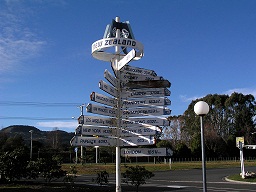 New Zealand has become the latest country to join the Madrid Protocol. The World Intellectual Property Organization (WIPO) announced New Zealand’s accession to the Madrid System for the International Registration of Marks, commonly referred to as the Madrid Protocol. The Protocol is an international agreement that allows trade mark holders to register their marks in member Countries (currently 87 and counting) by filing a single international application and designating Member States on an individual basis.
Two important points applicants need to be aware of are: 1) Any trademark holder who wishes to register a trade mark in New Zealand must make a declaration of its intention to use the mark; 2) WIPO advises that recording licences in the International Register will have no effect in New Zealand because this Country does not have practice rules allowing the recordal of trade mark licences.
The Accession of New Zealand to the Protocol will enter into force on December 10, 2012.
Gavin Hoey (Trade Mark Records Manager) 9 November 2012
Apple Apology – Text of Judgment available
 As noted in earlier posts (here and here) the statement Apple posted to their website wasn’t exactly what the judges in the Court of Appeal had in mind. The full text of the judgment following Samsung’s complaint is now available here. It is well worth a read and almost relentless in its disapproval of Apple’s actions.
The current version of the Apple website links to the intended wording. Or you could try this.
Patent applicants in India: beware the section 8 ‘trap’
 India has become an attractive and apparently low cost option for patent applicants with global interests, but recent Patent Appeal Board and Court decisions suggest that hard-won patents may be invalidated easily on technicality grounds if patent owners do not meet stringent disclosure obligations during the application procedure.
Patents County Court – a trailblazer for efficient UK court proceedings
 The Patents County Court was set up under its most recent guise in late 2010 under the stewardship of Judge Birss as Deputy Judge with the aim of providing efficient Intellectual Property case trials as an alternative to costly and timely High Court trials. The key provisions of the PCC are that costs are on a fixed scale capped at £50 000, damages which the court can award is limited to £500 000 and each trial is aimed to be concluded within 2 days.
The ever-innovative HH Judge Colin Birss QC has recently issued a second non-binding preliminary opinion during a trade mark case that was due to be heard at the UK Patents County Court (PCC). A non-binding opinion is an opinion of the residing judge, generally during the case management conference stage of proceedings (before trial) as to the likely outcome of the case, were the case to be tried at the PCC.
Guy Fawkes’ Patent Bombshell
 In England the 5th November commemorates the anniversary of the foiling of the infamous Gunpowder Plot of 1605 when a shady group of conspirators came ever so close to assassinating King James I of England along with much of Parliament. As the man caught red handed in the act of stacking the gunpowder under the House of Lords in Westminster, Guy Fawkes’ effigy is burned every year on bonfires across the country for various reasons, many of which are now forgotten to firework toting revellers. Perhaps one of the lesser appreciated reasons to be thankful for the failure of the plot is that less than twenty years later that same Parliament went on to draft the Statute of Monopolies which formed the basis of patent laws for the UK, the European Patent Convention, as well as for many countries with historical links to Britain’s Imperial past including the USA, Australia, Canada, India, South Africa, New Zealand and much of the Commonwealth.
These aren’t just any sausages, these are Newmarket sausages
 Sausages made in Newmarket, Suffolk have been awarded the Protected Geographical Indication (PGI) status from the European Commission. The Suffolk sausages join the ranks of protected foods such as Stilton blue cheese and Melton Mowbray pork pies.
The PGI status means that only products actually originating in the specific town, region or country in question may be identified as such (for example, only sausages produced in the town of Newmarket and a very specific surrounding region may be named ‘Newmarket sausages’). Generally, the products in question have very specific flavours or characteristics and so strict rules also govern the manufacture of products marketed under the PGI status. For example, Newmarket sausages must be made from prime cuts of pork from the whole carcass (no offal) and must have a minimum meat content of 70%.
IP Hit or Miss?
 Ever been watching a film or something on TV and noticed that the intellectual property (IP) reference that just cropped up in the script is wrong? No? Well, you probably manage to get out more than me.
To this author at least (patent attorney, tech nerd and SF geek) references to patents, trade marks and the like seem to pop up quite frequently in the entertainment media.
IP Hit or Miss? is an occasional series of articles that takes a light-hearted look at IP as it appears in the media (films, TV, news reports etc) as an excuse to talk about different IP topics. A vague rating of “IP hit or miss?” may also be given depending on how well the particular IP concept has been incorporated into the media in question.
Want to suggest a film, TV show or other reference that we can take a look at? Drop us an email or leave a comment below.
European Union Unitary Patent is a Few Centimetres Closer
With the relentless momentum of a rundown mobility scooter, the EU’s various legislative organs appear to be making progress in agreeing the final terms for a Regulation on the unitary patent and unified patent court. Compromises have been brokered and the word in Brussels is that the offending Articles 6-8 may be removed or replaced with something non-substantive. It appears that if the European Parliament adopts the Regulation in Mid-November then the Council may approve it in December or early January 2013. This could allow for the Regulation to come into force in the enhanced cooperation states of the EU (i.e. the EU less Italy and Spain) in late Spring of 2014.
Too Late to Gangnam?
 IPcopyrich is currently at AIPPI 2012 and sends this piece about “Gangnam Style”
Koreans are understandably proud of the worldwide success of “Gangnam Style” by PSY, carried on the back of the viral success of the song’s video parodying the opulent consumer culture of Gangnam in Seoul. So much so, that at the opening ceremony of AIPPI2012 (one of the most important intellectual property conferences of the year) in Gangnam, the Korean AIPPI president broke off in the middle of his opening address to launch into the Gangnam “horseriding dance” – it was quite a sight, though as neither we nor anyone else has preserved this for you on YouTube, you’ll have to take our word for it. You could ask the Prime Minister of Korea, who was in the audience.
 IPcopy