
IPcopy writers
 ipcopy
 ipcopyamelia
 ipcopyaz
 ipcopyben
 ipcopydev
 ipcopyeleni
 ipcopyemily
 ipcopymanuela
 ipcopymark
 ipcopyrich
Keltie LLP

K2 IP Limited

Quasar Trade Mark Appeal Case highlights importance of evidence
 This article concerns an appeal by the proprietor (“Quasar”) of UK Trade Mark No. 2409353 Q-ZAR in Classes 25, 28 and 41 (“the Mark”) against the decision issued on 11 March 2013, which revoked the marks protection in all goods and services of the registration pursuant to Section 46(1)(a) of the Trade Marks Act 1994 (“the Act”), namely:
Class 25: Clothing, footwear, headgear
Class 28: Games and playthings; gymnastic and sporting articles not included in other classes; electronically activated toys; electronically activated chest pack amusement games utilising electronic weapons and target apparatus for simulating combat conditions; toy guns, laser activated toys and video game machines; protective padding
Class 41: Entertainment services; amusement centre services and recreational services (more…)
Why not file your priority application as an EPC?
 The “obvious” thing for a UK patent applicant is to file a UK priority application; but in a survey of 10 major UK companies with in-house departments, 5 had a policy of filing EPC priority applications with a search request. An Espacenet search revealed that BASF, Bayer, Philips, and Siemens were also filing EPC priority applications. In total, the EPO receive 30 000 “first” applications per year.
The author may as well not beat about the bush: in his opinion, in many technological areas (subject to national security considerations), EPC priority filings should be the norm for any UK-based serious international patenter (and at least for German- and Dutch-based ones, too). And a client who is deterred by the upfront cost of an EPC priority filing compared with a UK priority filing arguably should not be in the patenting game at all, when the total cost of patent protection in the G7 countries over the full 21 years from priority is around £ 100 000 in current prices, and when even coverage only in the UK, the USA, and Germany costs a substantial proportion of this. (more…)
Pharmaceuticals: European Regulatory Clearance
 Today on IPcopy we have a guest post from Rob Jacob of Stephenson Harwood LLP on the subject of pharmaceutical name approvals.
Choosing a name for a prescription pharmaceutical product is not an easy task. You need a name that sets your product aside from the competition, something catchy, something memorable and most importantly something management and marketing believe in and can use to sell to the market – by no means an easy task. However, choosing such a name is not the end of the story. In fact, it is just the beginning. Getting a pharmaceutical name approved by both legal and the regulators is where the task really begins. The rules and regulations surrounding the clearance of pharmaceutical names are complex and fraught with hurdles that must be overcome.
Legal clearance is about ensuring that your proposed brand does not infringe a third party’s trade mark. Regulatory clearance is completely different and is the focus of this entry. Whilst this brief entry can’t do the topic justice, it will hopefully act as an introduction to the issues involved. (more…)
Chinese Trade Mark Reforms
 The new Chinese Trade Mark Reforms will come into effect on 1 May 2014. The key points of the amendments are as follows:
- Applications are required to be made in good faith;
- Multi-class applications are available;
- Protection is available for sound marks;
- Additional protection for prior right holders and a clarification of well-known marks;
- Statutory time limits have been added;
- No automatic right of appeal should an Opponent be unsuccessful in an opposition;
- Introduction of an invalidation procedure;
- Increasing compensation in infringements and fines for improper use of unregistered trade marks; and
- Providing for relevant measures for repeat infringers.
I will deal with some of the key points below. (more…)
Intellectual property in the Dilbert cartoons, and other things

ipcopydilbert
For me, three writers on management stand out:
• Peter Drucker (1909-2005), especially for The effective executive (1967). The effective executive contains robust – often uncomfortable –management truths (notwithstanding its inevitably dated case studies); it is short; and it is organised in a straightforward, unflashy manner which is appealing to the legal practitioner. Drucker also said (with resonance for any managing partner or in-house head of intellectual property): “As a manager, you clean up messes. Who the hell wants to do that?”
• Lucy Kellaway, who writes weekly in the Financial Times, fuelled by vacuous and incoherent pronouncements of corporate “leaders” and by insights communicated to her by frustrated employees. She questions the value of any new management ideas beyond those of Drucker and of “total quality management” of the 1980s.
• And finally, Adam Scott, who in the daily comic strip Dilbert has created a simultaneously surreal and recognisable US ICT company (ICT= information and communications technology). In this company, the nerdy Dilbert, the ferociously efficient Alice, and the lazy Wally work for the “pointy-haired boss” dedicated to “management speak” – while apparently failing to notice that they have non-human colleagues such as Dogbert, Catbert, and Ratbert. (UK residents can find Dilbert in the Daily Express and the International New York Times, as well as online at www.dilbert.com.)
Scott’s characters encounter not only management fads but also legal including IP matters. (more…)
Intellectual Property Bill – Ready for Royal Assent
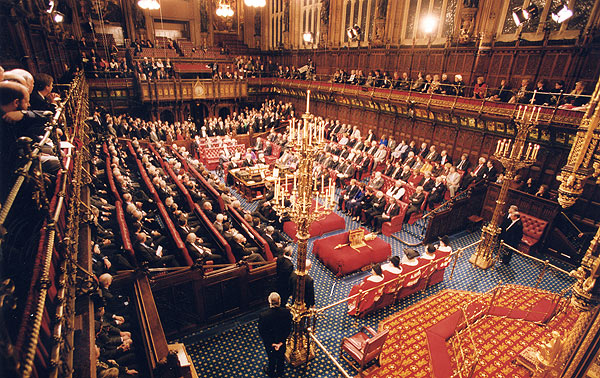
Parliamentary copyright images are reproduced with the permission of Parliament
The Intellectual Property Bill returned to the House of Lords on 2 April 2014 as part of the “ping pong” stage. The Lords considered the amendments to the Bill made in the House of Commons. As noted in our earlier post the Commons only made amendments to Clauses 3 and 13 (these clauses relate to the qualification criteria for unregistered design right and the criminal offence for copying a registered design).
There was a brief amount of discussion in the Lords (see transcript here) but both amendments were approved. The Bill will now move to Royal Assent and will pass into law.
The Intellectual Property Bill contains a clause related to the Unified Patent Court (see Clause 17). However, it is not expected that the UK will ratify the unified patent court agreement until mid 2015.
Mark Richardson 8 April 2014
New EBA Referral: The Questions are Published
 As you will have seen in previous posts, IPCopy has been tracking the progress of the latest referral to the EPO Enlarged Board of Appeal which concerns the scope to which clarity under Article 84 EPC can be raised in post grant proceedings. The Decision of the Technical Board of Appeal 3.2.08 in the case in question (T0373/12, on EP1814480) was published online late last week.
(more…)
Coat of Arms and Trade Marks – Dual Protection or Mutual Antagonism? seminar
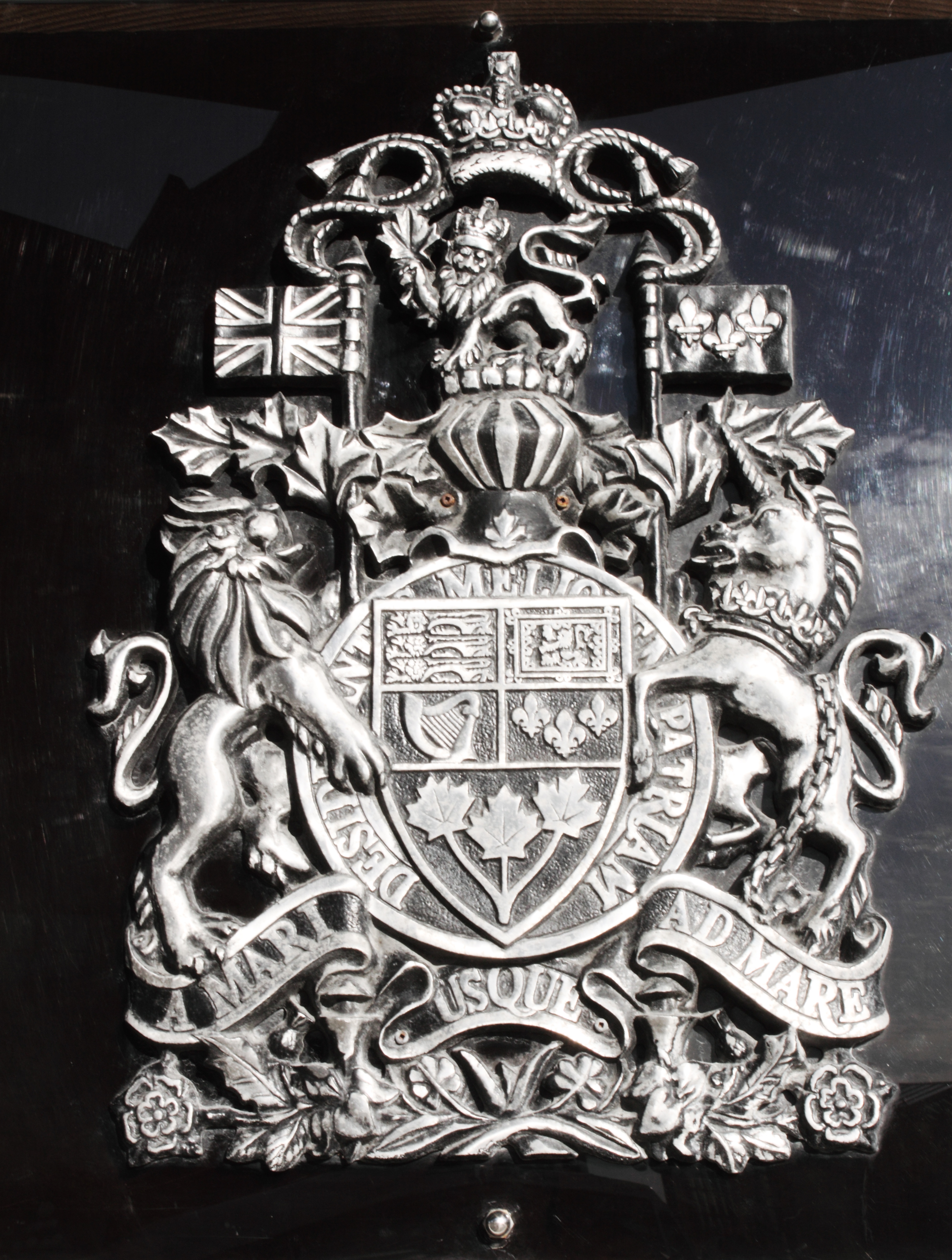 This blog is inspired by the ‘Coat of Arms and Trade Marks – Dual Protection or Mutual Antagonism?’ Seminar attended on 19 March 2014. The Speakers at the Seminar were Clive Cheesman, Richmond Herald of The College of Arms, Mark Engelman, Head of Intellectual Property at Hardwicke, Simon Johnson, Barrister at Enterprise Chambers, and Dr Richard Anthony, Bursar and Fellow of St Edmund’s College, University of Cambridge.
By way of background, the perpetual right to bear arms in England, Wales, Northern Ireland and the majority of monarchies within the Commonwealth, is granted to appropriate bodies by the College of Arms (also known as Heralds’ College or Heralds’ Office). This is a royal corporation consisting of professional officers of arms, overseen by the Earl Marshal, a hereditary office held by the Duke of Norfolk. The College of Arms was first incorporated in 1484 by King Richard III and given regulatory authority since 1522. Scotland operates a different system to the rest of the UK and this is overseen by Lord Lyon. (more…)
London Technology Week (16-20 June 2014) – FREE Keltie IP Clinics and IP Seminar
 London Technology Week runs from 16 June to 20 June 2014 and, as noted on the London Technology Week website “celebrates the vibrancy of tech innovation in our capital city. In a week of face to face events, businesses – from enterprise to start-ups – government, academia and general enthusiasts will come together to showcase London as a global tech leader.”
As part of London Technology Week, Keltie LLP will be holding a series of Intellectual Property Clinics and an Intellectual Property Seminar. (more…)
Pyramid Building with SCOTUS: Alice v CLS Bank
 The Alice v CLS Bank Supreme Court case has generated a lot of heat and light recently with over 50 amicus briefs filed, countless blog posts, and even a slew of newspaper articles on the subject. With commentary from the pro-software patents and anti-software patents side of the fence, the case was billed as either merely an opportunity to validate recent cases on the issue of patentable subject matter and section 101 (Bilski, Mayo & Myriad) or the End of Days Software Patents. Monday (31 March 2014) saw the oral arguments in front of the Supreme Court of the United States. Would this provide an indication of how the case would go? (more…)
Subscribe to RSS feed

 IPcopy