
IPcopy writers
 ipcopy
 ipcopyamelia
 ipcopyaz
 ipcopyben
 ipcopydev
 ipcopyeleni
 ipcopyemily
 ipcopymanuela
 ipcopymark
 ipcopyrich
Keltie LLP

K2 IP Limited

“US Supreme Court rules that human genes cannot be patented” – A look at the Myriad case

Image by andylepp (via Flickr.com under Creative Commons licence)
“US Supreme Court rules that human genes cannot be patented” is the headline that millions of people around the world will be reading today, after the US Supreme Court issued its decision yesterday (13 June 2013) in the ‘Myriad case’.
However, the headline for the general populace is quite different to the take-home message for those in the biotechnology community and for patent attorneys in particular. Whilst there is no doubt that some patents exist to human genes (although never in so far as they encompass a natural gene within a human being – a popular misconception in the press), patent attorneys have understood for a long time that patent offices, such as in the US and Europe, have not granted such broad patents for many years – the patentability requirements are simply too tough to obtain broad gene sequence claims in the modern era. In fact, the results of ‘the human genome sequencing project’, which opened up the possibility for people to easily try to claim human gene sequences has, in fact, made that prospect far harder. People have never needed to worry that ‘their’ genes might be patented by someone else.
In yesterday’s decision it was held that a naturally occurring DNA sequence is a product of nature and not patent eligible in the US, but a cDNA sequence is patent eligible provided it does not occur naturally.
So what would be a more realistic headline to this latest US decision? Well, fortunately for all concerned, the headline is probably not so dramatic as that stated above! We need to take a couple of steps back to understand the outcome of this latest decision.
Unitary patent package – Bits ‘n Bobs
 Here’s a selection of news snippets and musings related to the Unitary Patent System from the last week.
- Members of IPcopy and Keltie LLP attended Browne Jacobson‘s annual IP seminar last week. One participant floated an interesting observation from the US (population: 314 million; states: 50) regarding the unitary patent system in Europe (EU population: 504 million; 27 member states). While we are worrying about bifurcation and central attack, it was noted that the US, which is much closer in size to the EU than to any particular member state, seems to be looking forward to a patent system that on the surface more closely resembles their own system (one large geographic area covering millions of people and “local divisions” in different states) than the current European set up. Are we setting up a system that will be more popular to people outside the EU than to those within?
IP Hit or Miss? Software Patents in Europe
 In a recent article in the Guardian regarding President Obama’s plans to curb the perceived abuse of the patent system by non-practising entities (also known as patent trolls), the author points out that none of the recommendations involve a ban on software patent in the US, stating that:
“Nowhere in the administration’s recommendations is one that already applies in Europe: an outright ban on software patents…”
But is there such an “outright ban” on “software patents” (computer-implemented inventions) in Europe?
Crisis – Square Mile Run 2013 – 13 June 2013
 The Stupendous Six from Keltie (Dev, Elena, Katie, Leigh, Adam and Laura) will be taking part in the Square Mile Run on 13 June 2013 to raise money for Crisis and all they are involved in. Please support them as they participate in the Square Mile Run. If you would like to donate then please visit the team page and donate using the ‘Give Now’ button
About Crisis
Crisis is the national charity for single homeless people. We are dedicated to ending homelessness by delivering life-changing services and campaigning for change. Our innovative education, employment, housing and well-being services address individual needs and help people to transform their lives.
Twitter – Pull to refresh patent grants; Innovator’s Patent Agreement v1.0

tweet tweet
In previous posts we have looked at both Twitter’s proposed Innovator’s Patent Agreement and the “Twitter” patent (1, 2). In the last week or so Twitter has obtained a further granted US patent (to the “pull to refresh” feature) and has released version 1.0 of their Innovator’s Patent Agreement (IPA).
Down below we take a look at the latest granted patent and the first version of the IPA.
Trade Mark News Bites
 From the Man of Steel to Polish pretzels, perfume to cigarette packaging, here’s a collection of trade mark related news stories that have caught our eye in the last week.
What Indonesia needs to do to join the world IP community

Image courtesy of Laura Kehoe
Today on IPcopy we are pleased to welcome guest contributors Prudence Jahja and Andrew Diamond from Januar Jahja & Partners (JJP) who explain the IP challenges facing Indonesia as it prepares to join the ASEAN Economic Community. The article is reproduced with the kind permission of the authors.
One Minute Read
ASEAN member states are set to form the ASEAN Economic Community, a single harmonised market similar to the EU, in 2015. Members of this new union must modernise their IP regimes to comply with specific targets, including accession to the Madrid Protocol and the PCT.
Indonesia, however, faces a number of challenges. It must make both substantive legal changes (including strengthening protection for well-known marks and recognising three-dimensional and sounds marks), as well improve administrative procedures. But with no trade mark legislation on the agenda for 2013, it is unclear whether Indonesia and other ASEAN countries will be able to make all the necessary changes by the December 31 2015 deadline.
Trade Mark Review: Beer and the Bard
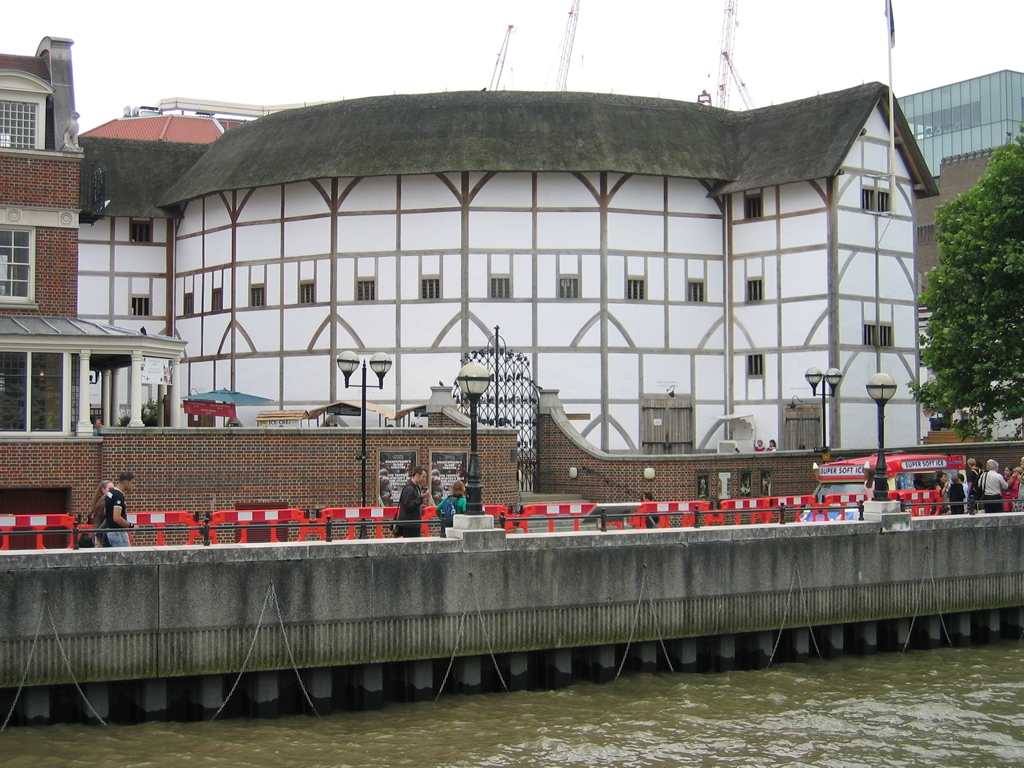 The trade mark case review below was prepared by Charlotte Blakey (Keltie LLP) and highlights the importance of demonstrating “genuine use”/”proper reasons for non-use”.
This review relates to an appeal brought under Section 76 of the Trade Marks Act 1994 (“the Act”) by the registered proprietor (“Jackson”) of International Registration No. 787794 ROYAL SHAKESPEARE (“the Mark”) against the decision issued at BL O-369-11, dated 26 October 2011. This decision stated that the Mark’s protection in the UK should be revoked on the grounds of non-use under section 46(1)(a) and/or 46(1)(b) of the Act. The Hearing Officer held that there had been no genuine use of the Mark during the relevant periods, nor had there been proper reasons for such non-use.
Unitary patent – Everybody expects the Spanish Opposition! (Part 2)

Back in March we noted that, after their previous joint challenge with Italy against the unitary patent system, Spain had filed two further actions, C-146/13 and C-147/13, at the CJEU against the European Parliament and the European Council. No details were available at the time as to the content of these actions. However, over the weekend this all changed with the publication on InfoCuria of the two actions.
Details of the actions and our initial thoughts are below. In the interests of full disclosure I should probably point out that our initial thoughts are ones of confusion: “what Treaty is that?”, “what does that mean?”, “Have you heard of Meroni?” and “Who’ll be the new Doctor?”*
The Intellectual Property Bill – Criminal Provisions for Registered Design Infringement
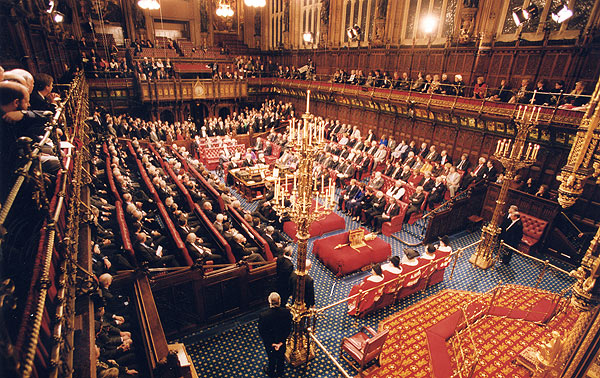
Parliamentary copyright images are reproduced with the permission of Parliament
In an earlier post we looked at the patent related provisions in the Intellectual Property Bill. Today, it is the turn of the registered design related provisions, or more accurately, one specific part of the registered design related provisions: Clause 13 – “Offence of unauthorised copying etc. of design in course of business”.
Clause 13 introduces a criminal offence with respect to registered design infringement which is punishable by imprisonment of a term “not exceeding ten years” and an unlimited fine. As we see below this provision has generated some opposing views.
Subscribe to RSS feed

 IPcopy