
IPcopy writers
 ipcopy
 ipcopyamelia
 ipcopyaz
 ipcopyben
 ipcopydev
 ipcopyeleni
 ipcopyemily
 ipcopymanuela
 ipcopymark
 ipcopyrich
Keltie LLP

K2 IP Limited

The Lords consider the UPC: “Where is it?”
 With the ongoing UPC related court case in Germany and the uncertainties arising due to Brexit, the preparations for the unitary patent system have, for the moment at least, something of the feel of a dead rubber match in a sporting competition.
Perhaps, once (if?) the German case allows German ratification preparations to continue and the UK has managed to make its intentions clear, the project will get up and running again. Until then any developments have, to my mind at least, the feel of going through the motions.
It was against this backdrop that the House of Lords Grand Committee met on 6 December 2017 to consider the draft Unified Patent Court (Immunities and Privileges) Order 2017. The approval of this Order by the House of Lords and its subsequent approval (along with the corresponding Scottish Order) by the Privy Council are the last pieces of the UK’s ratification process that need to be completed before the UK can formally ratify the UPC Agreement. (more…)
ADEC “steals” ANC colours

ADEC logo
Today on IPcopy we have a guest post from Tyrone Walker of Moore Attorneys on the subject of political party logos in South Africa. This post has been reproduced with the permission of the author.
The African Democratic Change (“ADEC”) party was officially launched on 1 December 2017 in South Africa. A representation of its logo is depicted right. (more…)
Somebody Else’s Problem – SEPs and the Commission
 Small quantities of excitement have been created by the “Communication from the Commission to the European Parliament, the Council and the European Economic and Social Committee” entitled “Setting out the EU approach to Standard Essential Patents”, linked on the Commission’s Patents and Standards page. Given the largely innocuous content of the Commission-originating document and the complexity of EU decision making processes, the title may well be the most contentious thing in the document. However, there are good reasons why the content is a little blander than might have been hoped, as set out in this article by Richard Vary (a distinguished standards warrior from his time at Nokia). (more…)
New York City Bar Association Trademark and Unfair Competition Committee Seminar
 During an unseasonably freezing spell in autumnal New York, I was honoured to be amongst the speakers at a NYC Bar Association seminar on 13 November 2017 organised and hosted by Ainslee Schreiber in her debut event since being recently appointed Chairwoman of the Trademark and Unfair Competition Committee of the Association.
Taking advantage of several International trade mark practitioners who were transiting through New York after the INTA Leadership Meeting in Washington, DC, the previous week, Ainslee organised and hosted an evening seminar on latest developments in key jurisdictions of interest to the Association’s members. Many braved the cold and it was a well-attended session, at the end of which I was delighted to meet Ronald Coleman, who successfully took THE SLANTS trade mark application all the way up to the Supreme Court and obtained registration of the mark.
Here is a review of the seminar with a few take-home points on each one of the presentations. (more…)
Patents, trade and foreign direct investment in the European Union
 The EPO published a paper last week – Patents, trade and foreign direct investment in the European Union – which assessed “the impact of the European patent system on the circulation of technologies through trade and foreign direct investment in the EU single market”.
The paper contains an interesting discussion on the impact of the patent system on trade and investment, particularly in “high IP” industries such as bio-pharmaceuticals, ICT and medical device industries. However, as far as the discussion about the unitary patent system is concerned the paper glosses over or omits the challenges or drawbacks facing the unitary patent and Unified Patent Court. (more…)
CIPA seminar: Standard Essential Patents (SEPs) Licensing and Litigation

Huawei LTE patent
IPcopy watched CIPA’s seminar on Standard Essential Patents (SEPs) recently which was presented by Kevin Scott and Richard Vary. The seminar covered a number of topics: What is a SEP?; FRAND – what does it mean?; Licensee/licensor behaviour; Litigation venues (this part was also of wider interest than the SEP world); Unwired Planet v Huawei; SEP arbitration and the future.
What is a SEP?
The seminar started with definitions of “essential”, in the context of standard essential patents, from both the ETSI and IEEE organisations (see bottom of post for a copy of these definitions) before noting that this was quite a dry definition and the SEPs that we come across in today’s world are small improvement patents that can save a bit of power in a transmitted message or add a few extra transmitters into a particular radio channel.
The core technologies behind the smartphone in your pocket were standardised around 20 years ago but in the time since then many small improvements have been made. Kevin noted that the result of such improvements means that multiple people can now stream video while on their commute to work using a broadly similar amount of radio spectrum to that which was used to broadcast a few channels to the whole country. (more…)
The CITMA Paralegal Seminar ‘Madrid Protocol: tips and tricks – what paralegals need to know’
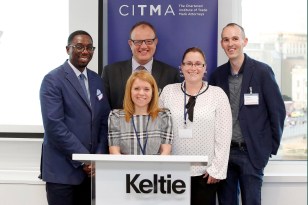
(l-r: Roy Scott; Jonathan Clegg; Sharon Fleet; Melanie Oliver; Daniel Smart)
Following her Majesty the Queen’s approval of the ITMA’s Royal Charter and the news that the Trade Mark Administrators had in turn undergone a rebrand and become CITMA Paralegals, Keltie LLP were delighted to host the first CITMA Paralegal seminar on 27th October 2017 at their London office.
The seminar was chaired by Roy Scott from Keltie LLP, who in turn introduced the guest speakers: Sharon Fleet and Melanie Oliver (UKIPO), Jonathan Clegg (Cleveland Scott York) and Daniel Smart (Colman + Smart). (more…)
Unified Patent Court: the end of the beginning or the beginning of the end?
 The unitary patent and UPC are within touching distance of going live. However, recent developments in the UK and Germany potentially put the whole system at risk. So, simply put, where are we now?
When the unitary patent system first came to IPcopy’s attention we were at a conference in Brussels in December 2012 where the keynote speaker from the European Commission suggested that the system would be up and running in just over a year, i.e. Spring 2014. The reality and difficulties of setting up the unified patent court meant that the “go live” date consistently slipped further and further along. Back in August 2013 we had adjusted the expected go live date to “late 2015” and last May, a start date somewhere within 2017 was expected. (more…)
TV show Silicon Valley does patent law….pretty well
 Season 4 of the US TV show Silicon Valley aired earlier this year. For those that aren’t familiar with Silicon Valley, IPcopy notes that it is a comedy show that follows six people who have founded a startup company, Pied Piper, relating to an innovative data compression algorithm developed by one of the founders of the company.
The situations that the members of Pied Piper find themselves in feel, for the most part, plausibly accurate perhaps because one of the co-creators of the show, Mike Judge (of Beavis and Butthead and King of the Hill fame) worked in a silicon valley startup earlier in his career.
Since the show’s fictional startup is working in the Silicon Valley environment you might expect intellectual property issues to crop up now and then and this was indeed the case in the most recent season with a couple of episodes dealing with a patent relating to a decentralised, peer to peer network.
So, how did it do? Did it get its IP references correct or did it make an unholy mess like Suits? (more…)
UKIPO Consultation – Industrial Strategy: Intellectual Property call for views
 The UK Intellectual Property Office has issued a consultation calling for views on “maximising the incentives of the Intellectual Property system to stimulate collaborative innovation and licensing opportunities”. The consultation, “Industrial Strategy: Intellectual Property Call for Views [PDF]” closes on 15 November 2017.
The consultation forms part of the government’s plans for an “ambitious new industrial strategy” and asks the question what can the government do to encourage innovators to do more collaboration and commercialisation and to stimulate knowledge exchange and follow-on innovation. (more…)
Subscribe to RSS feed

 IPcopy