
Keltie LLP

K2 IP Limited

Trade Secrets
 A trade secret is a formula, practice, process, design, instrument, pattern, commercial method, or compilation of information which is not generally known or reasonably ascertainable by others, and by which a business can obtain an economic advantage over competitors or customers. The scope of trade secrets is virtually unlimited. (more…)
EU Commission: unitary patent concerns; IP insurance and unitary SPCs
 The European Commission website provides something of a byzantine navigational challenge so IPcopy is extremely grateful to Martin Chatel for pointing us in the direction of the Commission staff working document “A Single Market Strategy for Europe – Analysis and Evidence” which discusses the unitary patent package. (more…)
Alice in USPTOland
 Following the Alice Corp v CLS Bank decision in June 2014 the USPTO’s position with respect to patent eligible subject matter has changed.
But having swallowed the red pill just how deep does the rabbit hole go? What is and what is not patent eligible subject matter in the US? (more…)
Patent Box Consultation: closing date for comments 4 December 2015
 As previously reported on IPcopy, HM Treasury and HM Revenue and Customs are currently running a consultation on proposed changes to the UK Patent Box scheme. The consultation runs until this Friday (4 December 2015) and the consultation document, which includes some background on the existing Patent Box scheme, can be found here.
The main change proposed in the consultation is the use of R&D expenditure as a proxy for “substantial activities”. A so called “nexus fraction” will then be calculated in which a company’s own R&D expenditure on the IP in question plus any subcontracted R&D expenditure to an unrelated party (these figures together forming the “qualifying expenditure”) will be divided by the qualifying expenditure plus any R&D subcontracted to a related party plus acquisition costs.
Companies who have developed their own IP are likely to have a nexus fraction of close to “1” and so will essentially be unaffected by the revised rules. However, company’s which have acquired IP will see nexus fractions of <1 which will therefore reduce the income which qualifies for the new Patent Box.
Although the main change is the use of R&D expenditure as a proxy for substantial activities it is noted that the proposed changes will also have some other fairly noticeable effects, namely: (more…)
UPC Update (November 2015, part II): SPCs, US interest and UK Taskforce
 In today’s update we highlight an article relating to Supplementary Protection Certificates (SPCs) and the UPC and an article that discusses the interest of US applicants for unitary patent protection. We also have the most recent update from the UK’s UPC Taskforce. (more…)
IP licensing
 What is an IP licence?
An IP licence in its simplest form is an agreement where an IP owner (the Licensor) permits another person (the Licensee) to engage in activities that, in the absence of the IP Licence Agreement, would infringe the Licensor’s legal rights attaching to the IP. In return the Licensee pays the Licensor a fee or confers some other benefit. It is a written agreement that gives rights to do something that would otherwise be an infringement of the IP rights of someone else.
A typical case may involve the Licensor granting the Licensee the right to make and sell patented product perhaps worldwide and for the life of the patent(s). The Licensee agrees to pay the Licensor a royalty, defined as a percentage of Net Sales Value. The Licensor agrees not to make or sell patented product itself nor permit any 3rd Party to do so. (more…)
EPO Guidelines 2Day Roadshow – Review Part Part 3 – Added Matter
 Our final post covering the EPO’s recent roadshow for professional representatives around Europe is on the subject of added matter. The first article in this series looked at the rule 164 procedure and the second article covered early processing, PCT Direct and rule 71(3).
European patent applications, of course, should disclose the invention in a sufficiently clear and complete manner that the invention can be carried out by a skilled person. Applications should not be amended such that they contain subject matter that extends beyond the content of the application as filed. Extended added matter is both a ground for opposition under Art 100(c) and revocation under Art 138(1) EPC.
The EPO representative at the roadshow confirmed the general approach the Examiners take when assessing whether an amendment represents added matter. The practice at first instance is: (more…)
Intellectual Property from a Corporate in-house perspective
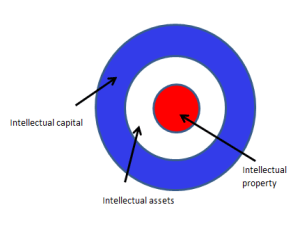 It’s easy for a private practice patent attorney to develop a narrow view of the IP world. Essentially:
Draft – File – Prosecute – Grant – Repeat*
It was therefore a pleasure to welcome Donal O’Connell1 to Keltie recently to provide some insight into the world of Intellectual Property from the perspective of the corporate in-house officer. (more…)
Misleading invoices – IP Scammers
 We are delighted to report that there has been some good news in the fight against companies/individuals issuing misleading invoices which appear to be from the UK Intellectual Property Office (UK IPO) (previous IPcopy articles can be found here).
In this regard, a company trading as Intellectual Property Agency Ltd (IPA) and its director Mr Harri Mattias Jonasson were found liable for trade mark infringement and passing off and ordered to pay £500,000 plus legal costs to the UK IPO. (more…)
Law in the Global Marketplace – Hogan Lovells Annual Patent Conference
 Hogan Lovells demonstrated its global reach by holding its annual UK patent conference in London as a joint session with its “Law in the Global Marketplace” conference in California. A presentation on the current status of the UPC was made from London, an update on US patent legislation was made from California, and a transatlantic panel session followed (chaired from London by a German). The session was interesting, and featured a variety of views leading to an open discussion. Highlights follow below. (more…)
Subscribe to RSS feed

 IPcopy