
Keltie LLP

K2 IP Limited

And now Belgium ratify the UPC Agreement!
 Following yesterday’s post about Sweden depositing its instrument of ratification in Brussels (Bork!), we were notified by reader Hans van de Heuvel that Belgium has now also deposited their instrument of ratification. This information is available on the Council of the European Union website here. This news brings the total official number of countries in the unitary patent system to four (after Austria, France and Sweden).
Next up on the list could be Denmark as this site appears to suggest they have now got Royal Assent for their UPC Act following their recent referendum.
IPcopy’s ratification infographic (see below) has been updated to reflect the news for Belgium (as we noted in yesterday’s post, for an answer to the question “What’s up with this infographic?“, please see the bottom of the ratification post which also contains full details about the ratification process). (more…)
Bork! Sweden ratifies UPC Agreement
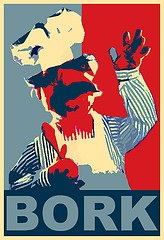
Bork! (Image via Max Geiger/Flickr under creative commons (click image for link))
Update
According to the European Commission website, Sweden deposited its instrument of ratification on 5 June 2014 to become the third country to complete its ratification formalities. Sweden are involved in setting up a Nordic-Baltic regional division of the Unified Patent Court and join France and Austria as the three countries who have completed the ratification process. Belgium and Malta have ratified the agreement but not yet deposited their instruments of ratification.
IPcopy’s ratification infographic (see below) has been updated to reflect the news from Sweden (for an answer to the question “What’s up with this infographic?“, please see the bottom of the ratification post which also contains full details about the ratification process). (more…)
Private Copying and Parody Exceptions – What’s Changed?

Image from Wikipedia. User: Hellisp
IPKat broke the news this Monday that revised draft Statutory Instruments for Personal Copies for Private Use and Quotation and Parody copyright exceptions have been released by the government.
As readers may recall, in March this year, five draft legislations (covering Personal Copies for Private Use, Quotation and Parody, Disability, Public Administration and Research, Education, Libraries and Archives) were published that were to modernise UK copyright law. These were slated to become law on 1 June 2014. However, in May, it emerged that two of these exceptions, Private Use and Parody (arguably the two most important sets of changes), would be considered at a later stage.
Now, the amended draft legislation on these two outstanding exceptions has been published. So what has actually changed?
UPC: Preparatory Committee Progress Report
 The website for the Preparatory Committee for the Unified Patent Court has just been updated with a progress report. Some highlights from the report are as follows: (more…)
Could CALDEA cause confusion? Case Review
 In this case review, which was first published in the June issue of the ITMA review, we look at case T-26/13 (dm-drogerie markt GmbH & Co KG v OHIM, CJEU, General Court (Third Chamber), 12 February 2014) and the assessment of likelihood of confusion between the trade marks CALDEA and BALEA.
On 22 July 2010, Semtee filed a Community Trade Mark application for the word mark CALDEA for, inter alia, “soaps; perfumery, essential oils, cosmetics, hair lotions; dentifrices” (class 3), “consultancy relating to business management of leisure premises, non-medical, making use of water, in particular heated water, for relaxation, leisure, physical maintenance of and keeping fit in the field of health” (class 35) and “personalised consultancy, advice and assistance relating to the operation of a leisure centre, non-medical, relating to water, in particular heated water, for relaxation, leisure, physical maintenance and keeping fit in the field of health” (class 44).
The application was published on 20 September 2010 and dm-drogerie markt GmbH & Co KG (“dm-drogerie”) filed a notice of opposition against registration of the mark for the above-mentioned goods and services based on its earlier international trade mark No 0894004, BALEA, in classes 3, 5 and 8 (covering, inter alia, “soaps, perfumeries, essential oils, preparations for hygienic and beauty use”) designating protection in the European Union (EU). The Applicant claimed infringement under Article 8(1)(b) of Council Regulation (EC) No 207/2009.
The Opposition Division rejected the opposition and dm-drogerie filed a notice of appeal with OHIM against the decision. (more…)
CJEU hands down Meltwater Decision – in-depth analysis
 The Court of Justice of the European Union (CJEU) yesterday handed down its much anticipated Meltwater decision (Case C-360/13 Public Relations Consultants Association v Newspaper Licensing Agency and Others).
The CJEU ruling follows a referral from the UK’s Supreme Court and related to whether cached copies and on-screen copies of websites that are generated in the course of browsing may be made without the authorisation of copyright holders. Here at IPcopy we’ve taken some time to look over the decision to bring you our in-depth review. (more…)
A review of R19/12 and the successful Petitions for Review to date [Updated]

Applications for Petitions for Review at the EPO do not have a have a high success rate. Of the 105 currently-available Decisions relating to Petitions for Review, the vast majority have been found to be inadmissible; only four have resulted in a successful outcome for the applicant (i.e the decision under review being set aside) – R15/11, R21/11, R3/10 and R7/09, and one in a successful interim decision for the Petitioner, with the final decision still pending – R19/12, putting the current hit rate at just under 5 %.
Decision R19/12 issued in the last month or so, and makes for interesting reading. The Decision is only available in German – mine’s somewhat rusty, so there’s a (very!) crude machine translation here for anyone who is interested to see it*. It isn’t going to be affecting practice for any EPA’s, but it will have a significant impact on internal organisation at the EPO.
As well as taking a look at the reasons for the success-so-far of R19/12, this post will also delve a little deeper into the four successful Petitions to see how they come to succeed, and see what became of the patents after the proceedings were reopened… (more…)
You Say “Insolubly Ambiguous,” I Say “Reasonably Certain”

A Nautilus
Today on IPcopy we have a guest post from Maia H. Harris, Mark James FitzGerald, Ph.D., and Shayne Y. Huff, Ph.D of Nixon Peabody LLP on the recent Nautilus v. Biosig Instruments decision in the Supreme Court of the United States. Over to Maia, Mark and Shayne:
The United States Supreme Court Announced A New Standard For “Indefinite” Patent Claims, But It May Be Closer To The Same Old Thing
While critically important, claim construction has only infrequently received serious attention from the highest US Court. Let’s face it – claim construction is not exactly exciting. Maybe that’s why we were all so excited here in the US on Monday, when the Supreme Court issued a decision in Nautilus v. Biosig Instruments in which it set out a purportedly new standard for determining when a claim has met the US Patent Act’s requirement that a claim be clearly defined. The trouble is that we may have to wait a while before we figure out what that standard actually means. (more…)
Crisis – Square Mile Run – 12 June 2014
 Keltie will once again be supporting Crisis this year by running and volunteering in the Square Mile Run on 12th June. This year we have the Fab 5, Alistair, Dev, Elena, Gav and Mehmet running and site stewards Bridget, Helen and Maria F volunteering at the event. Please support them as they participate on behalf of Keltie. If you would like to donate then please visit the team page and donate using the ‘Give Now’ button.
Crisis is the national charity for single homeless people. We are dedicated to ending homelessness by delivering life-changing services and campaigning for change. Our innovative education, employment, housing and well-being services address individual needs and help people to transform their lives.
An insight into Europe – the IP Box debate
 Today on IPcopy we have a guest post from FTI Consulting on the subject of the EU Commission’s queries into the IP box regimes of Member States.
Concern over the slow economic recovery in the European Union has meant that tax policy in European Member States has increasingly been used as an instrument to help promote economic growth. Member States have historically had the right to set their own fiscal policies and many have used these to attract investment from particular industries or permit particular operations by companies in the hope to gain a larger share of global business. This has resulted in increased competition between countries not only in the way they set corporate tax rates but also in how they use tax incentives. However some domestic rules are now under the spotlight, as the European Commission starts to investigate certain regimes deemed unfair by their critics.
The latest round of European Commission queries have concerned IP box regimes, but this is now widening in scope to include tax rulings between a Member State’s tax authority and relevant companies as the Directorate General for Competition plays an increasing role in the investigations. (more…)
Subscribe to RSS feed

 IPcopy