
Keltie LLP

K2 IP Limited

Computer implemented inventions in biotechnology and healthcare at the EPO
 IPcopy recently attended an EPO presentation from the EPO’s Bioinformatics team on the subject of computer implemented inventions (CII) in biotech and healthcare and how to go about patenting such inventions.
This author works in Keltie’s software team and so is familiar with CII related inventions. Bioinformatics inventions however can sit somewhere between the biotech and software disciplines and so this presentation provided a handy insight for attorneys from either field into the subject area. (more…)
CIPA Seminar Review: Update on Computers and IP Seminar 2019
 IPcopy was at the CIPA “Update on Computers and IP Seminar 2019” recently. A few brief highlights from the various talks follow:
In the first session, “Patenting Computer implemented inventions in Healthcare at the EPO”, Igor Dydenko provided the EPO view on patenting inventions in the Healthcare field which apparently is the top technical field with the most patent applications in the EPO (according to the EPO’s 2018 annual report).
Igor noted that the relevant provisions for healthcare related inventions were those relating to technicality (Art 52(2), (3) and 56 EPC) and medical methods (Art 53(c) EPC). A review of the two examination requirements (note the EPO moving away from the “hurdles” language*) of technicality and inventive step then followed which highlighted the Guidelines for Examination approach for mixed type inventions incorporating a mathematical method (see G-II, 3.3). In particular the discussion highlighted the requirement for inventive step to only be supported by those features of the claimed invention which provide a technical effect serving a technical purpose. (more…)
Case Review – O/797/18, Mont (Opposition), UK IPO, 12th December 2018
 Mont Adventure Equipment Pty Ltd filed a UK designation of international registration No 1385791 for a mark on 27th November 2017 (see the opposed mark below), with a priority date of 10th November 2017. This designation was opposed by AA Textiles Ltd in respect of class 25, including “technical clothing, footwear and headgear for adventure sport and extreme adventure sport pursuits” under s5(2)(b) of the Trade Marks Act 1994. The Opponent relied on UK trade mark registration No 3191303, filed on 14th October 2016, for Mont Noir in class 25 for inter alia “clothing, headwear, footwear”. The case report can be found here.
The goods involved were acknowledged as identical. For Mont Noir, the average consumer was deemed to be the general public with a reasonable level of attention. However, in light of the specialist technical clothing covered by the Applicant’s specification, the average consumer for the opposed mark was deemed to have a higher than average level of care and attention.
While both marks were held to be averagely distinctive for clothing, for English-speaking consumers aware that the French terms involved mean “mountain” and “black mountain”, the evocative association weakened the distinctiveness of both marks when considered in relation to adventure sports clothing. (more…)
Oh, Jeremy Corbyn! A look at Labour’s “Medicines for the Many” Policy Paper
 Last Tuesday the UK’s Supreme Court delivered their verdict in the “prorogation of Parliament” case and found that the advice provided to the Queen was unlawful with the effect that prorogation had never happened. Parliament was duly recalled on Wednesday where the Speaker directed that the item in the Journal of the House of Commons relating to Prorogation was to be expunged and replaced with a reference to the House being adjourned instead.
The Commons session last Wednesday went ahead with a series of Urgent Questions and the atmosphere in the chamber steadily deteriorated as things went on. Last week also marked the return to UK TV of the show The Good Place, and in honour of that show and its main character Eleanor Shellstrop, the session in Parliament last Wednesday could probably fairly be summed up as a forking shirtshow.
Lost a little in the noise generated by the Supreme Court decision and the subsequent recall of Parliament however was an announcement from Labour in Jeremy Corbyn’s conference speech (and associated policy paper) regarding medicines and the use of the patent system. (more…)
Has Brexit scuppered the UPC?
The unitary patent system is aiming to create a European patent registration and litigation system. To bring the whole system into being, 13 EU member states, including France, Germany and the UK, need to ratify the UPC agreement and currently 16 member states (including France, the UK but crucially not Germany) have done so.
For some time, the unitary patent project has been stalled because an ongoing legal challenge in Germany has prevented Germany’s ratification process from being completed. In addition to this, the fallout from the UK’s Brexit vote has also cast a sense of uncertainty over the planned system because the unitary patent system is only, in its current form, open to EU member states to join. The UK’s expected departure from the EU therefore casts some doubt on whether the system will even take place.
In the face of the above two challenges however the UPC Preparatory Committee has continued to make technical and operational preparations in anticipation of a positive result from the German Constitutional Court.
Recently however the German Federal Ministry of Justice made a statement to the German Parliament indicating that an examination of the UK’s exit from the EU on the proposed unitary patent system will need to take place before ratification can occur. (more…)
POP trade mark – case review
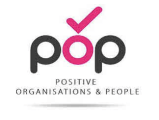
UKTM Application No. 3315911
Background
Positive Organisations & People Ltd (the Applicant) is the proprietor of UK Trade Mark Application No. 3315911 in Classes 35 and 41 (copy of mark shown).
This mark was opposed* by PSP COMPANY BVBA (the Opponent) under the fast track procedure on the basis of its earlier EUTM Registration Nos. EU016150773 (Mark 1) and EU016150807 (Mark 2) below in Classes 35 and 41 under Section 5(2)(b) of the Trade Marks Act 1994.

Mark 1
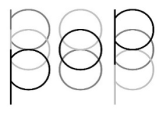
Mark 2
The Applicant filed arguments against the opposition arguing that there were clear differences between ‘POSITIVE ORGANISATIONS & PEOPLE’ and ‘People On Point’, which would be recognised by consumers.
No Deal Brexit, Boris and IP
 Following Boris Johnson becoming the Prime Minister of the UK last month, and given his desire to leave the EU by the 31 October 2019 deadline with or without a deal, we have highlighted the UK government’s plans for trade marks, designs and patents in the event of a “No Deal” Brexit in more detail.
It is noted that in the event of a “No Deal” Brexit, the UK will leave the EU without any transition period and the “switch-over” date for IP, referred to as “Exit Day” below, will be 31 October 2019 (unless there are further extensions) (more…)
Roy Scott obituary

When a teenage Roy Scott reported for his first day at the Ministry of Defence back in 1987, he was allocated to a department doing something he’d never heard of – called ‘IP’. Luckily for IP, Roy caught the bug and took his first steps in a profession on which he was to have a profound influence. For Roy wasn’t just a consummate professional: he devoted himself to shaping the IP community too.
After a couple of years with the MoD, Roy moved into private practice with Lloyd Wise. Next, he joined Jenkins before moving to Field Fisher and then Nabarro, where he led sizeable IP support teams. From there, Roy brought his outstanding experience to Keltie in 2003, where he rose to become the firm’s Senior Paralegal.
Canada’s Patent Rules come into force on October 30, 2019
 Today on IPcopy we have a guest post from Wendy Lamson of Perley-Robertson, Hill & McDougal LLP on the subject of national phase entry in Canada. This post has been reproduced with the permission of the author.
The new Patent Rules were published on 10 July 2019 in Canada Gazette, Part II. The amendments will bring the Canadian Patent Rules into conformity with the Patent Law Treaty and will come into effect on October 30, 2019.
Highlights of some of the more important changes are discussed below. Notably, certain deadlines will be shortened and the ability to reinstate an abandoned patent application or revive a lapsed patent will become more difficult in certain circumstances. (more…)
European patent prosecution – impact of the International Searching Authority (ISA)
 Overview
When entering the European regional phase from the PCT phase the choice of the international searching authority (EPO or non-EPO international searching authority) has an impact on the actions that are required shortly after regional phase entry and also an impact on the fees that are payable. This article provides a high level overview of the main points of difference. (more…)
Subscribe to RSS feed

 IPcopy