
IPcopy writers
 ipcopy
 ipcopyamelia
 ipcopyaz
 ipcopyben
 ipcopydev
 ipcopyeleni
 ipcopyemily
 ipcopymanuela
 ipcopymark
 ipcopyrich
Keltie LLP

K2 IP Limited

Trade Mark Protection in China
 Keltie was pleased to host Tian-ying Zhao and Wang Yanping from IntellecPro. They gave the Keltie Trade Mark team a very interesting seminar on trade mark protection in China. I have summarised 5 important points to bear in mind when filing trade marks in China. (more…)
UPC – still a long way to go…
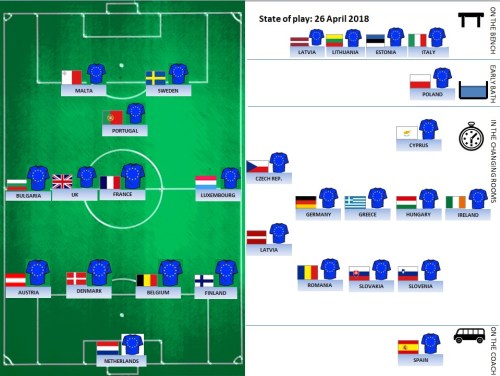
 On 26 April 2018, World IP Day, the UK surprised more than a few people by ratifying the UPC Agreement and in the process taking the total number of countries who have ratified the agreement to 16. The UK press release that accompanied this announcement stated “Our ratification brings the international court one step closer to reality”.
Since the ratification process only requires 13 member states, including France, Germany and the UK, to ratify then it might appear to some that German ratification is the only remaining obstacle to the unitary patent system going live.
However, IPcopy suggests that it is still too soon to be able to say if and when the system will come into force. (more…)
London Tech Week 2018
 London Tech Week, the week long festival showcasing the best of tech and innovation, returns again this year between 11th and 17th June and Keltie will be taking part with the following two free events: (more…)
Lionel Messi’s EU Trade Mark: how ‘Fame’ can change the conceptual comparison of marks
 A judgement issued by the EU General Court on 26 April 2018 ended opposition proceedings started in 2011 over Lionel Messi’s application to register the mark MESSI + Logo as a EU Trade Mark. The Barcelona striker can finally see his surname registered. The full judgement is available in French or Spanish here.
Background
Messi already owned a number of EU Trade Mark Registrations, in particular, for his full name LIONEL MESSI (EUTM Reg. 6353131), for LE0 MESS1 (stylised) (EUTM Reg. No. 9118852) and for his signature (EUTM Reg. Nos. 6353296 and 10394476), but the trade mark application in issue (EUTM Appl. No. 10181154) was just for the surname MESSI combined with a Logo (see the blog image at the top of this post). (more…)
Brexit and Intellectual Property – state of play May 2018
 The EU-UK draft withdrawal agreement was republished recently to show which sections have been agreed and which sections require further discussions. The agreement has been helpfully colour coded into green sections (agreed provisions, technical legal revisions only) and yellow sections (policy agreement, drafting changes required). Sections that are left white represent terms proposed by the EU where negotiations are still required.
The draft withdrawal agreement contains a provision for a transitional period (Article 121) which will run from the UK’s official exit from the EU (on 29 March 2019) until the end of 2020.
A summary of the provisions that relate to intellectual property (IP) is provided below. It is noted that the articles of the withdrawal agreement that relate to IP (Articles 50-57) contain a mixture of green and white sections. The “green” provisions that have, in principle, been agreed are: (more…)
United in Europe
In June 2016 the UK voted to leave the European Union, raising many questions around EU Trade Marks and Community Designs, as well as representation rights before the EUIPO.
Keltie’s “United in Europe” video below highlights our response to Brexit. (more…)
Why the EQE pre-exam was a good idea
 (All statistics used in this article are derived from my new StatistEQE website at http://statisteqe.beetz.nl)
If you want to be a European Patent Attorney who can represent clients before the European Patent Office, you first have to pass an exam. The European Qualification Examination, also known as the EQE, is well-known for its low pass rate. Only one in three candidates passes the full four paper exam in one year. After three years, another third of all candidates is still struggling with at least one of the papers.
In 2009, acknowledging that the low pass rate may be problematic, the exam committee came up with a counterintuitive idea. They added another hurdle. Since 2012, before you are allowed to appear at the real exam, you first have to pass a pre-exam. 10 legal questions, 10 claim analysis questions, 4 statements per question that have to be judged TRUE or FALSE, and a complex marking scheme to score all answers on a scale of 0-100. Only if you score 70 marks or more (50 before 2014), you are allowed to sit the main exam next year.
Since before the first pre-exam, there has been a lot of criticism on both the concept and the execution of this added challenge. Law is not maths. It is not easy to come up with 80 legal question that can only be answered with TRUE or FALSE and are challenging as well as unambiguous. In 2014, 2015 and 2016, successful appeals at the EPO Boards of Appeal led to 56 candidates being allowed into the main exam although having scored less than 70 marks for their pre-exams. This year, two statements were considered so ambiguous that every answer was accepted to be correct. IP Kat wrote an article about it. In the comments, candidates, former candidates and other anonymous contributors complained about the exam and the exam committee and questioned the usefulness and fairness of the pre-exam. On the DeltaPatents blog, similar comments are to be found in even greater numbers.
But most of these negative comments and opinions are based on emotions, often of candidates who just went through the stress and hard labour that are commonly associated with sitting the exam. For a better informed opinion about the pre-exam, it may be useful to have a look at the numbers. For the pre-exam to be a useful tool, two important statements have to be judged TRUE. (more…)
UPC Ratification: The UK completes its ratification formalities
 According to the website of the Council of the European Union (and just about every other official IP channel), the UK deposited its instrument of ratification (on 26 April 2018) to become the 16th country to complete its ratification formalities. The UK joins Latvia, Lithuania, Estonia, Italy, the Netherlands, Bulgaria, Finland, Portugal, Luxembourg, Malta, Denmark, Belgium, Sweden, France and Austria as one of the sixteen countries who have completed their ratification processes.
The unitary patent system requires 13 countries to ratify, including the UK, France and Germany. However, the German Constitutional Court challenge has thrown the timescale and the long term future of the unitary patent system into doubt.
There are now enough countries to have ratified the unified patent court agreement that the system will come into effect if Germany completes its own ratification procedures and sufficient approvals to the PPA are obtained.
(more…)
Mark Richardson 27 April 2018
Brexit – European Commission Notice regarding .EU domain names

Image from pixabay.com
Late last month the European Commission issued a notice regarding the impact of Brexit on .eu domain names.
The notice states that, unless the EU and the UK agree otherwise in the withdrawal agreement, from 30 March 2019 the “EU regulatory framework for the .eu Top Level Domain” will no longer apply to the UK. This has a number of consequences: (more…)
When sharing your trade secrets with others, just remember that NDAs are like confetti

Image: pixabay.com
No longer the neglected step-child of IP:
Trade secrets have been the neglected step-child of IP but that situation is fast changing. There are various forces at play helping to increase the importance of trade secrets.
Firstly, the law is changing.
· The Defend Trade Secrets Act passed in the USA in May 2016
· The EU Directive on Trade Secrets is enacted by member state on 9 June 2018
· China explicitly included trade secrets in its 2018 revisions to the Anti Unfair Competition Law
Changes in the eligibility requirements and enforcement mechanisms of patent laws around the world, but especially those in the US – and especially as they relate to software and business methods, make trade secrets an attractive mechanism to protect a company’s competitive advantages. (more…)
Subscribe to RSS feed

 IPcopy