
IPcopy writers
 ipcopy
 ipcopyamelia
 ipcopyaz
 ipcopyben
 ipcopydev
 ipcopyeleni
 ipcopyemily
 ipcopymanuela
 ipcopymark
 ipcopyrich
Keltie LLP

K2 IP Limited

IP Bill & Clause 13 – an IPcopy response to an ACID response to a Katpost

Parliamentary copyright images are reproduced with the permission of Parliament
Last night IPKat posted a reply from Dids Macdonald of ACID on the recent series of posts relating to Clause 13 of the Intellectual Property Bill. Merpel (of IPKat) interspersed some comments into Dids’ views which helped throw a light on some of the comments being made.
However, having read the post a couple of times we felt moved to write a response to the post on IPKat. Since the resultant response was so long we’ve posted it here on IPcopy and have submitted a link to this article for inclusion in the comments section of the original post on IPKat. (more…)
Movember patents: Top five moustache-related patents
 It’s Movember folks! The time of year when gentlemen around the world cultivate facial topiary to raise money for excellent causes. And so that they can look dashing, of course.
IPCopy is celebrating Movember with a run-down of our favourite moustache-related patents. Why some of these products are no longer available for purchase in a gentleman’s fashion establishment near you is a total mystery…
The Unitary Patent and the UPC – CIPA seminar 19th November 2013
 Yesterday I had the pleasure of speaking at the CIPA seminar “The Unitary Patent and the UPC” with Alan Johnson of Bristows LLP and Tim Roberts. A copy of the slides for my section of the talk is enclosed below along with some links to additional information covered in the talk (the Poland Deloitte report and some views on the impact of the Scottish Referendum).
A not entirely serious look at Clause 13 of the IP Bill….
Parliamentary copyright images are reproduced with the permission of Parliament
Clause 13 of the Intellectual Property Bill is attracting a fair amount of discussion on both sides of the argument. I thought I’d take a closer look at some of the issues around the clause and what happened before its appearance in the Bill. I must have been in a funny mood when I wrote the post below as its in the style of a totally fictional conversation between a client and his patent attorney. See if you can guess which side of the argument I come down on…… (more…)
Copyright – Receiving less than you bargained for?
 IPcopy is pleased to welcome guest contributors Yavan Brar and Alex Canham from Herrington & Carmichael LLP who take a look at the issue of copyright arising in oursourced contractual work. The article is reproduced with the kind permission of the authors.
A number of businesses now look to outsource non-core functions, particularly in creative areas, to third party contractors. This may be in the form of marketing design work (such as a brochure or an article), software development/maintenance work or a musical composition. However, are commissioning really clear as to the rights they have in the finished product?
EPO changes rules on Euro-PCT searches
 Somewhat lost alongside the exciting announcement that the EPO is going to scrap the controversial 2 year divisional deadline rule was another recent decision of the Administrative Council.
Readers of the consultation section on the EPO website will have been aware that there was a consultation earlier in the year relating to Rule 164 and in a decision dated 16 October 2013 the Administrative Council duly announced a change to Rule 164 (which is reproduced in full at the bottom of the post). The amended Rule 164 is scheduled to enter into force on 1 November 2014 for any application for which the supplementary European search report under Article 153(7) EPC has not been drawn up as of 1 November 2014 or the first communication under Article 94(3) EPC and Rule 71(1) and (2) EPC or, as the case may be, Rule 71(3) EPC has not been drawn up as of 1 November 2014. (more…)
Restaurants, Bars, Hospitality Businesses and Trademarks – Top Tips
 IPcopy is pleased to welcome guest contributor Stacey C. Friends, Partner at Boston firm Ruberto Israel Weiner, who provides useful tips on trade mark protection for restaurant names and hospitality businesses in general, based on her extensive experience in advising individual restaurants as well as small, medium and large restaurant chains in the USA. The article is reproduced with the kind permission of the author. Keltie’s Manuela Macchi has added comments drawing a parallel with the UK and EU.
Retail, food and hospitality businesses often have more problematic trademark issues than other types of businesses due to their territorial nature. While software, consumer goods and many other businesses immediately function in interstate or international commerce, many restaurants, hotels, or retail stores start out doing business in one geographic location. Sometimes the business plan includes a strategy to expand or franchise, or perhaps the location of the business (e.g. a hotel in downtown Boston) naturally lends itself to national and international travelers and publicity.
Are these patents the key to the next revolution in 3D printing?
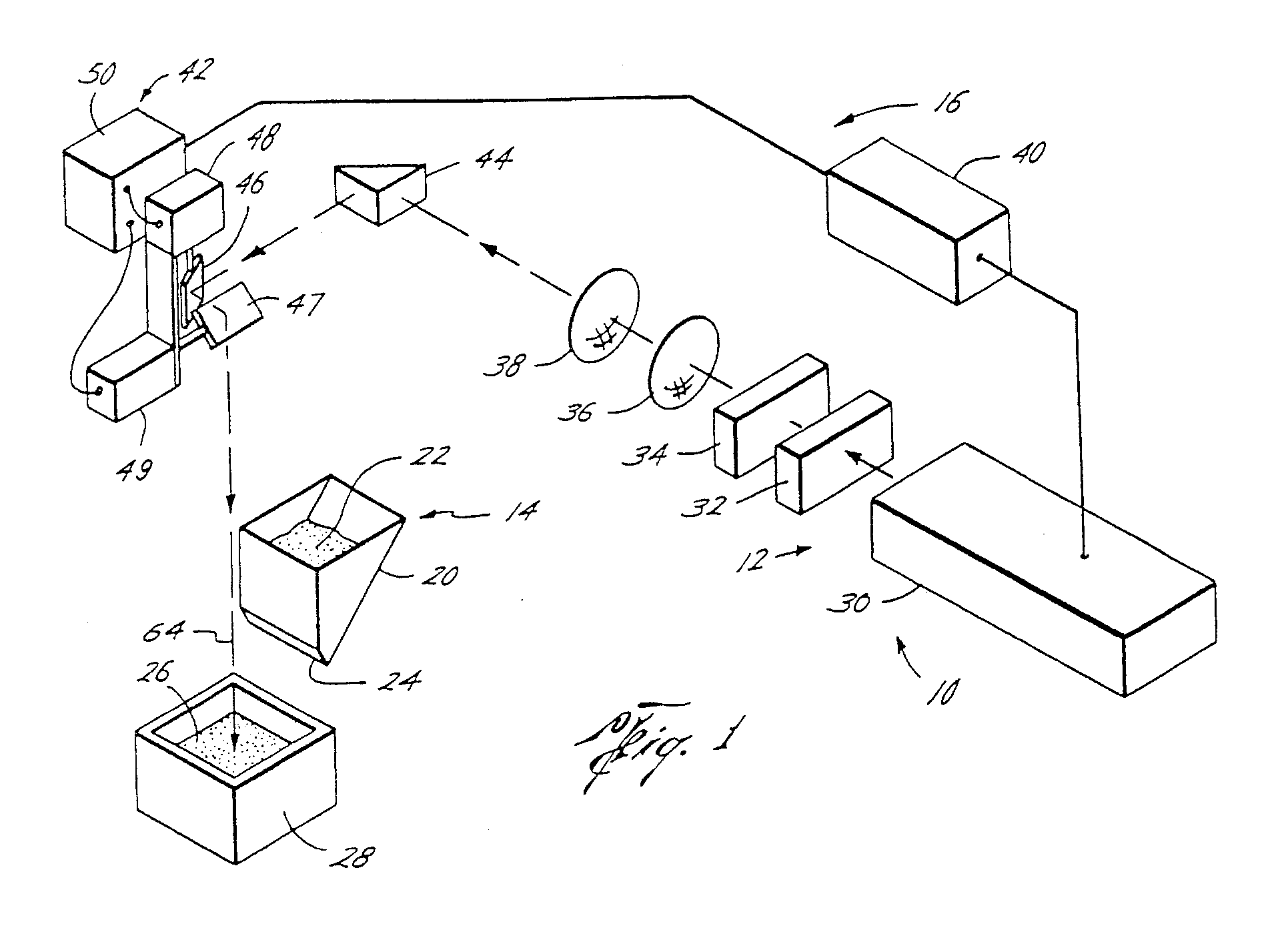 In recent years, 3D printing has entered the mainstream lexicon, partly due to increased media coverage and partly because 3D printers are becoming more affordable and accessible. In particular, the rise of desktop 3D printers aimed at the domestic market such as the MakerBot Replicator and 3D Systems Cube have been a boon for hobbyists and early adopters. These printers are sold ready to use out of the box for simplicity compared to early affordable solutions which were self-assemble kits like the MakerGear Mosaic or the open source RepRap Mendel.
Typically, low cost domestic 3D printers, including those mentioned above, use an additive manufacturing technique called Fused Deposition Modelling (FDM) to create objects. FDM involves a heated nozzle extruding thermoplastic into successive layers to build up a desired object.
The McKinsey Global Institute, The Economist and Quartz, along with many others, cite the expiration of certain patents related to FDM in 2009 as enabling the recent proliferation of cheaper FDM 3D printers. They go on to anticipate that the expiration of key patents related to another additive manufacturing technique, selective laser sintering, in 2014 may lead to another step change in the field of 3D printing.
But what are these key patents that everyone’s talking about, and will they really make such a big impact?
Unitary patent package – Ratification update
 As noted on the Bristows website the French Senate launched, on 23 October 2013, a Bill authorising ratification of the Unified Patent Court Agreement. The Bill can be found here and contains an overview of the UPC system. The Bill has been flagged up under an accelerated procedure which presumably means France is pushing to be the first of the “required 3” countries to ratify the Agreement (the other two required countries are the UK and Germany).
The UK’s IP Bill is, of course, in the House of Commons where it is currently awaiting a date for its second reading. UK ratification is not expected until early 2015. If anyone knows the state of play in Germany then feel free to drop us a line or post a comment below!
Mark Richardson 1 November 2013
IPcopy in Washington – Part 2: AIPLA 2013 – Developments in EP patent law

Last week IPcopy had the pleasure of attending the annual meeting of AIPLA in Washington. As well as listening to some of the hot issues of the day on the US side of the pond (section 101/patent eligibility and non-practising entities in particular – see our earlier post here) we also got the chance to get some US practitioner’s thoughts on the European patent landscape.
What follows below therefore are some European developments that may be of interest to our US colleagues. (more…)
Subscribe to RSS feed

 IPcopy