
IPcopy writers
 ipcopy
 ipcopyamelia
 ipcopyaz
 ipcopyben
 ipcopydev
 ipcopyeleni
 ipcopyemily
 ipcopymanuela
 ipcopymark
 ipcopyrich
Keltie LLP

K2 IP Limited

Misleading Invoices: a warning

What do you mean I spent all my pocket money settling a fake invoice?
No IP blog would be complete without a warning on misleading IP invoices, so here’s ours!
If you are the owner of an intellectual property (IP) right then you may from time-to-time receive communications that resemble official looking invoices for IP services. Such misleading invoices are sent directly to the IP owner and are designed such that they give the impression to the IP owner that they have to either use the service offered or pay the amount listed.
It is important that all IP owners double check the invoices they receive and satisfy themselves that such invoices are genuine.
Trade Mark Tribunal – Fast Track Opposition Procedure at the UKIPO
 In a recent post we looked at a consultation from the UKIPO which was proposing superfast patent processing. That’s not the only consultation that is running at the UKIPO and there is a further one entitled “Fast Track Opposition Procedure. Trade Mark Tribunal”. This consultation is running until 17 May 2013 and seeks the views of users and potential users of the UK national registration system about the introduction of a lower cost “fast track” opposition based on earlier registered or pending marks.
As noted in the consultation a fast track opposition process may differ from the existing procedures in a number of ways, namely:
- Lower opposition fee
- Grounds limited to s.5(1)/5(2)
- Limit to the number of earlier marks that can be relied upon
- If over 5 years old, proof of use to be filed with the notice of opposition using a pro-forma statement with exhibits
- Leave required for either party to file any further evidence
- Decisions normally from the papers
- Introduction of refundable appeal fee large enough to discourage frivolous appeals
The full reasoning behind the above proposals can be found in the consultation document but a few issues with the proposals, as highlighted by our trade mark team, are noted below:
UK Intellectual Property Policy Reform: Newsbites from the Westminster Legal Policy Forum
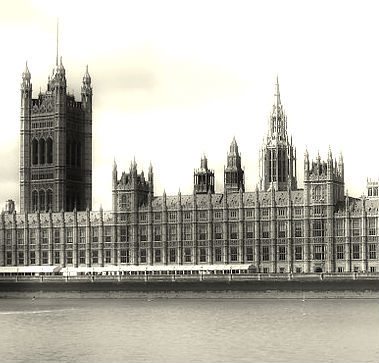
IPCopy welcomes K2 IP Attorney Adam Brocklehurst for his inaugural blog post, which we hope will be the first of many! Adam was our reporter-on-the-ground at the Westminster Legal Policy Forum on 30 April 2013, and you can enjoy his whistle-stop-tour of the event here.
The Westminster Legal Policy Forum gathered in Whitehall this week for a wide-ranging discussion of hot IP policy and political topics. IP Copy was there to pick up any interesting tidbits. Headliners were HHJ Birss, Baroness Wilcox, Sean Dennehey, representatives from the European Commision, and various speakers from practice and industry.
RAND – the search for meaning reaches Seattle
 IEEE 802.11 is a set of standards that cover wireless local area networking. These standards provide the basis for wireless network products which use the Wi-Fi brand (yes, it is a brand) – most people reading this article will use such technology many times a day. Patents have played a contentious role in the development of this standard, particularly in the successful licensing campaign carried out by the Australian national science agency CSIRO. This campaign has attracted strong criticism – for example in this Ars Technica article – and also some robust defence, particularly from Australia in this piece from the Patentology blog. While clearly no-one likes to be told that they are governed by trolls, hopefully tempers have now cooled, and this is all water under the bridge.
IP – Hit or Miss? Why Tony Stark might want to reconsider Pepper Potts as CEO
 In the film Iron Man 2, Tony Stark (Robert Downey Jr) gets into an argument with his friend Lt. Col. James “Rhodey” Rhodes (Don Cheadle) who, after a bout of CGI enhanced fighting, makes off with one of his Iron Man suits.
Shortly after this, Pepper Potts (Gwyneth Paltrow) who is CEO of Stark Industries is seen berating someone on the telephone about the suit that has gone missing. During the call she says the following (as near as I recall):
“Illegal seizure of trademarked property”
and
“Don’t tell me we have the best patent lawyers in the country and then not pursue this”
So, what’s wrong with these statements? (Other than the fact I picked up on them and thought to write an article about it!).
ICANN & the Trademark Clearinghouse – relief for trade mark owners
 The launch of new generic Internet domain extensions highly expands the domain name system and increases competition.
The press has widely reported the launch of the new generic top-level domains (gTLDs) which can include a geographic location (e.g. NYC), a generic term (e.g. Music) or a mark (Ralphlauren). Nearly 2000 applications should be added this year to the currently available gTLDs (.com, .net) and country code top-level domains (ccTLDs, e.g. geographical location .uk, .eu). The examination of hundreds of candidates revealed last year (see article in the Figaro blog here) the avid appetite of Amazon and Google for new extensions who spent millions to request 101 and 76 Internet extensions respectively revolving around digital content and media issues.
This is considered one of the most important changes in the structure of the Internet for years. A symbiosis has to be found to regulate the protection of trade mark owners and their Intellectual Property rights.
In this respect, The Internet Corporation for Assigned Names and Numbers (ICANN), which is responsible for the management of the top-level domain name space, has established a rights protection system through the creation of a database, called the Trademark Clearinghouse (TMCH), for names that are the subject of a prior registration. The Trademark Clearinghouse has been available since 26 March.
Superfast Patent Processing: UK IPO Consultation
The UKIPO has opened consultation on a new accelerated prosecution service dubbed “superfast”. The intention appears to be to offer this premium service in addition to free acceleration services currently available, which can already bring the time taken to obtain a UK patent to less than a year.
Proposed Legislation- Modernisation of the European Trade Mark System
 Proposals for reformed legislation, which have been drafted in order to help modernise and further synchronise the European Trade Mark system, have surfaced on the web. The European Commission has indicated that the reform package will ‘foster innovation and economic growth’ throughout the EU as well as ‘ensure coexistence and complementarity’ throughout the trade mark systems. Further, the European Commission has stated that the reform ‘will be beneficial for applicants and owners of both the Community Trade Marks (‘CTMs’) and national trade marks’ by increasing the efficiency of the EU internal market. Further, regardless of the size, market and geographical influence of an entity, the proposals will aim to create a more level playing field.
Once the proposals have been adopted (potentially Spring 2014) the Commission advise that EU countries will have to implement the new rules of the Directive into national law within two years. With regard to the Regulation, most amendments will become effective when it is enforced. However, the Fees Regulation will require prior authorisation by the Committee on OHIM fees with the aim of adopting it before the end of 2013. Below is an overview of some of the proposals. Please note that these proposals are not official.
Unitary patent package – the CJEU speaks
 As noted in an earlier post Spain has recently filed a further challenge against the unitary patent system. That wasn’t, however, their first crack at bringing down the system. Back in May 2011, Spain and Italy filed actions (C-274/11 and C-295/11 respectively) against the Council of the European Union attacking the use of the enhanced cooperation procedure that underpins the unitary patent system. Today comes news of the decision of the Court of Justice of the European Union (CJEU) in respect of the earlier Italian/Spanish challenge.
The Unitary Patent and Post-grant Amendment
At a CIPA webinar on the Unitary Patent on 15 March 2013, a comment from a member of the panel took us rather by surprise: a suggestion was made that there is no provision in the UPC Agreement for post-grant amendment.
This IPCopy writer promptly dove for her well-worn copies of the Regulation and the Agreement, streams of obscure patent doomsday situations running through her head, and words of disbelief cascading in the direction of her unfortunate office-mates (such are the hazards of an open plan)*. Could this be true?
Well, yes and no, it seems… (more…)
Subscribe to RSS feed

 IPcopy