
IPcopy writers
 ipcopy
 ipcopyamelia
 ipcopyaz
 ipcopyben
 ipcopydev
 ipcopyeleni
 ipcopyemily
 ipcopymanuela
 ipcopymark
 ipcopyrich
Keltie LLP

K2 IP Limited

Kitchen Nightmares: The Spotted Pig
 Things are boiling over in the restaurant industry as Gordon Ramsay has applied to register a trade mark for ‘The Spotted Pig’ in the UK covering various food products and, importantly, restaurant services.
As readers might know, The Spotted Pig is a Michelin starred restaurant in New York City run by fellow Brit chef April Bloomfield, and boasts celebrity co-owners Jay-Z and Bono. The Spotted Pig is a hit in NYC serving ‘seasonal British and Italian, using local ingredients where possible’ and has been open since 2004.
Splitting the difference
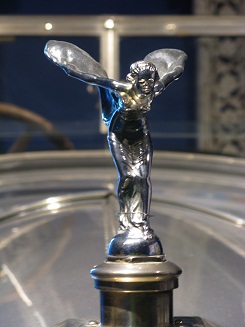 What happens when one trademark is owned by two different traders? This is almost a contradiction in terms, since the role of a trademark is to distinguish the goods and services of one trader from those of others. But it does sometimes happen.
A prime example of a famous trade mark being “split” between two separate traders is the ROLLS ROYCE brand. When the company split off into the vehicle manufacturing enterprise, and the aircraft engine enterprise, ownership became completely separate, though both companies continued to use the famous brand name.
Einstein’s Fridge
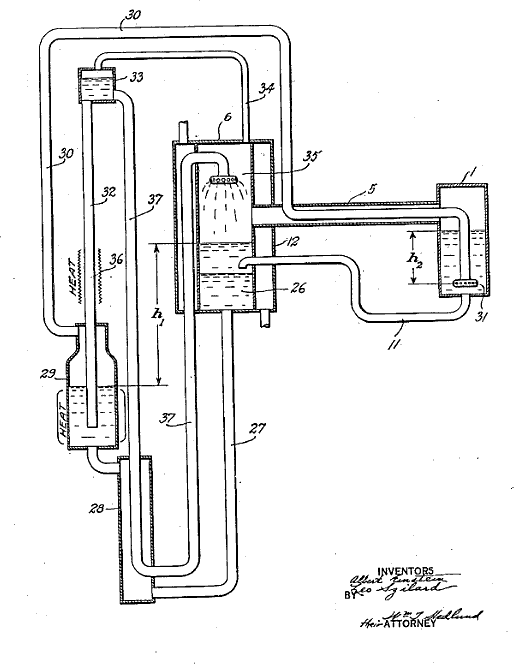 We all know a bit about Albert Einstein – genius, Patent Office examiner, purveyor of a noteworthy moustache and also ….inventor of a fridge.
Plant Variety Rights?
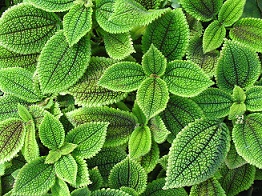
Here at IPcopy, we like to introduce our readers to every flavour of IP, including some to suit the more adventurous IP-palette. Here, then, is a brief look at the much under-deliberated Plant Variety Right: what is it, why would you want one, and how do you get it?
What is it?
Plant Variety Rights are a lesser-known feature of the intellectual property spectrum that are available to protect any variety of plant that you or your business has bred, discovered or developed. In the UK, Plant Variety Rights (or Plant Breeders’ Rights) are administered by the Plant Variety Rights Office, whilst in the EU the Community Plant Variety Office oversees grant of Community Plant Variety Rights.
Youview, your view.. Whose view?

The Eye of Sauron is my view
It has emerged that the long-delayed broadband TV service backed by Lord Sugar has lost its battle over the right to use ‘YouView’ as their trade mark.
The High Court found ‘youview’ to be confusingly similar to ‘Your View’, which is a business to business billing service operated by telecommunications company Total.
The Hand Test Revisited

Most patent attorneys at some point in their career will have been introduced to the “Hand Test”. This is a rule of thumb (well, four fingers and a thumb) test to determine whether a claim is useful. There are various versions, but a familiar one is for Claim 1 of a patent to be printed out – for the sake of argument and objectivity, let’s say in 12 point Times Roman with one-and-a-half spacing – and for a patent attorney (let’s say one taking size 8 in gloves) to try to cover it with their hand laid flat, with fingers together, on the paper over the printed claim. If there are lines of text showing above or below the hand, the claim is generally not infringed by the embodiment of interest, avoidable by one simple workaround or another, or simply impossible to infringe.
Mid Month Movember Mo-photos
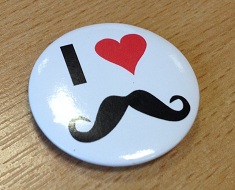 We promised to post an update to show how we are getting on with our moustache growing. Readers of a nervous disposition should probably stop reading now!
Trade Mark Searching
 Before filing a trade mark application or using a mark, it is advisable to conduct independent searches on the relevant official Register (or Registers if more that one territory is of interest). Whilst these searches are not compulsory or necessary in order to file a trade mark application, it is certainly a useful tool to establish whether or not there are any earlier identical or confusingly similar marks that may bar your own use or registration for the desired mark.
Independent searches available for new marks include:
1) Identical search – this is a coarse filter looking for identical marks in identical goods or services only; or
2) Full availability search – this looks for both identical and confusingly similar marks in identical/similar goods or services.
In general, an identical search is great if you have a variety of marks, as it can reduce the list significantly, or if you have already been using the mark unregistered for a period of time and do not wish to change it and full availability searches are recommended for new marks that have not yet been put to use and can be changed should a conflicting mark be identified. However, ad-hoc advice on the best searching strategy is strongly recommended.
It is also possible to conduct a proprietor search in order to review the marks of your competitors. Again, a useful tool to ensure that you do not step on anyone’s toes and that they are not straying too close to your own marks.
Whilst not exhaustive, it may also be advisable to check trade directories and the Internet against the possibility of existing trade marks which are in use and enjoy protections but are not registered.
Charlotte Blakey 14 November 2012
Does Every Experiment Need a Test Tube?
 The UK Intellectual Property Office has recently launched a consultation entitled “The Research and Bolar Exceptions”. While all patent practitioners may have got as far as the end of the title, the profession will split into two groups after reading the subtitle, “A formal consultation on patent infringement in clinical and field trials”, indicating that this is another exercise in sculpting patent law specifically for the pharmaceutical industry.
This all relates to the interpretation of s.60(5)(b) of the Patents Act 1977, which states that:
“An act which, apart from this subsection, would constitute an infringement of a patent for an invention shall not do so if… it is done for experimental purposes relevant to the subject-matter of the invention;”
Most European countries have a similar provision as a result of the harmonisation in European patent law associated with the creation of the Community Patent and European Patent Conventions in the 1970s. Different countries, however, interpret this provision in quite different ways. The UK courts have interpreted this exception narrowly, leading to widespread concern that the UK is out of step in not having a clear exception for clinical trials.
New Zealand join Madrid Protocol
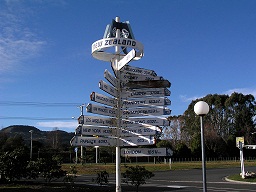 New Zealand has become the latest country to join the Madrid Protocol. The World Intellectual Property Organization (WIPO) announced New Zealand’s accession to the Madrid System for the International Registration of Marks, commonly referred to as the Madrid Protocol. The Protocol is an international agreement that allows trade mark holders to register their marks in member Countries (currently 87 and counting) by filing a single international application and designating Member States on an individual basis.
Two important points applicants need to be aware of are: 1) Any trademark holder who wishes to register a trade mark in New Zealand must make a declaration of its intention to use the mark; 2) WIPO advises that recording licences in the International Register will have no effect in New Zealand because this Country does not have practice rules allowing the recordal of trade mark licences.
The Accession of New Zealand to the Protocol will enter into force on December 10, 2012.
Gavin Hoey (Trade Mark Records Manager) 9 November 2012
Subscribe to RSS feed

 IPcopy